
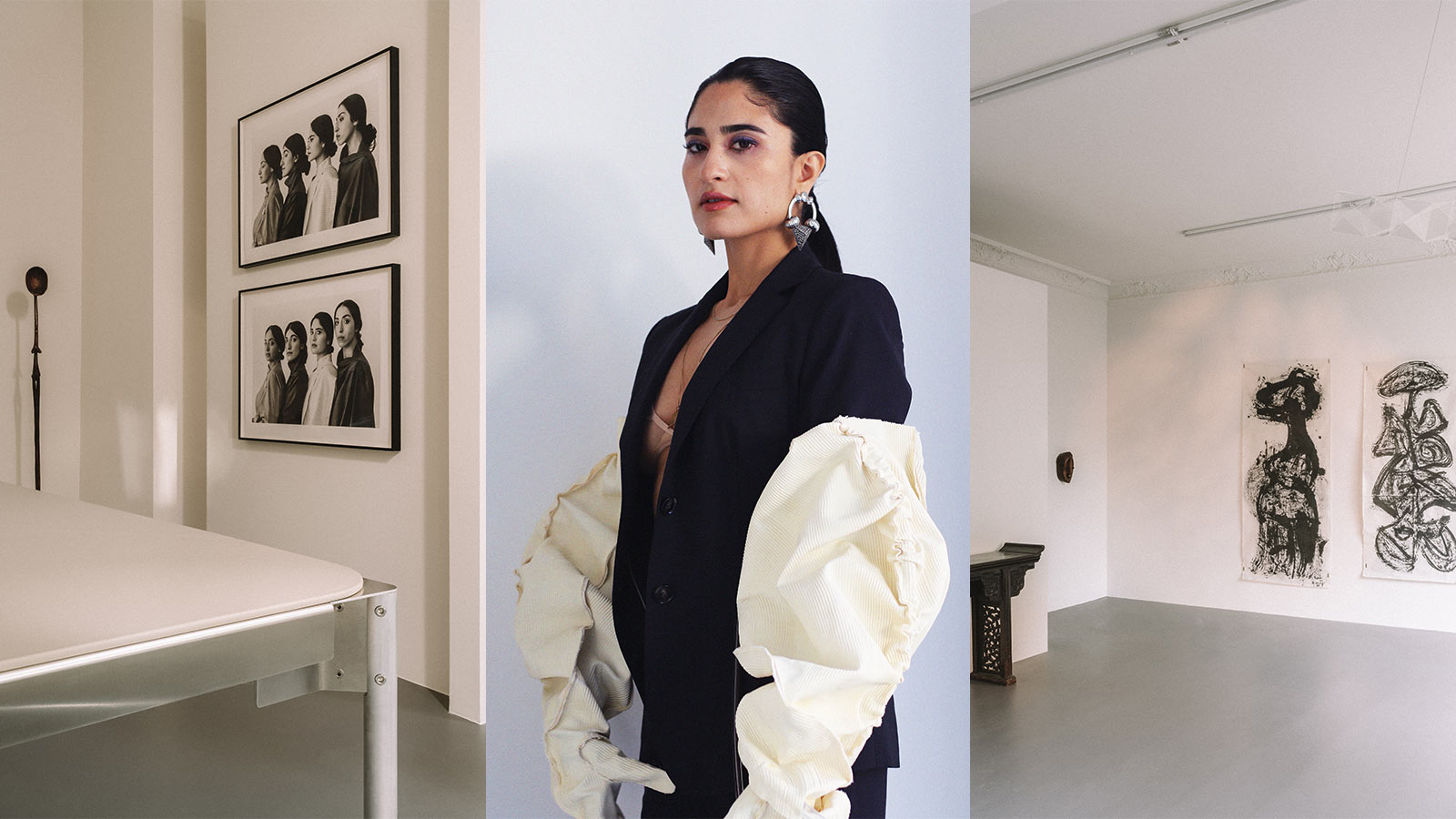
Art closes gaps. Between past and present, between cultures and between you and me. At a time when societies are so rabidly drift apart, as they are currently doing, the unifying power of art is particularly important. Anahita Sadighi is aware of this importance and has followed her calling. In this interview, the gallery owner, curator and artist from Berlin talks to us about how political events have had a lasting impact on her work and what makes her look to the future with optimism – despite global war and chaos.
FACES: What was the first art object that triggered something in your soul?
Anahita Sadighi: As a child, I spent a lot of time on sparkling nomadic carpets – I was particularly fond of gabbehs. These “playgrounds” of floral motifs, borders and mysterious symbols fed my imagination. My father, who had been involved in this art for decades, told me stories of tribes, landscapes and journeys – the objects became the carriers of these narratives. These textiles are more than art objects: they are sensual experiences – you can see them, feel them, smell them. Many long for this immediacy; it reminds us of our physicality. Kilims and gabbehs were both practical and symbolic: patterns as symbols of protection and power, inspired by mythical animals. This combination of myth, craft and philosophy fascinates me. Artists such as Anni Albers and Sheila Hicks brought such techniques worn by women into the modern age and broke down the hierarchy between art and craft. I also see the rugs of my childhood in this line: as woven manifestations of knowledge and freedom – proof that simplicity, craftsmanship and sensuality are the origin of spiritual depth.
F: When you look at art objects from past centuries: Do you discover something in them that humanity has since lost? Or do you also find universal themes in them that have not changed to this day?
AS: Both are certainly true. Many works of art from past centuries were created collectively: in workshops, guilds and studios where knowledge, intuition and craftsmanship were passed down through generations. We often do not know individual names, and yet these works radiate a depth of collective authorship. They are an expression of a consciousness in which idea and execution were still inextricably linked. With industrialization and now digitalization, this relationship has changed. The name dominates more than the gesture, the design more than the execution. As a result, something is lost: the presence that arises when thought, body and material are in a lively exchange. At the same time, there are always movements that recapture this sensuality of creation – artists, craftspeople and designers who dedicate themselves to the process. They remind us that beauty does not lie in the flawless end product, but in the combination of mind and hand, in the respectful treatment of the material. What remains are the universal themes. When we look at the oldest pictorial testimonies of mankind – the cave paintings of Lascaux or the rock paintings of Sulawesi – we recognize ourselves in them. Animals, bodies, movement, rituals: they tell of birth and loss, of community, fear and hope. These earliest images are over 30,000 years old and yet are immediately understandable. They show that art has always been a means of locating oneself – both in the visible and the invisible. In many contemporary works, I miss the aura that arises when idea, hand and ritual form a unity. When a work emerges from bodily knowledge, devotion and communal experience, it has a different resonance – an energy that points beyond the object. But the questions that have always moved us remain the same: How do we live together? How do we remember? How do we transform experience into form? Perhaps this is the real continuity of art: it holds a mirror up to us and reminds us that creation is always also an act of preservation.
Q: What work of art or object would you put aside today to illustrate the current zeitgeist to a future generation 200 years from now?
AS: If I had to choose a single work to capture our present moment, it would be a portrait by Sakir Khader from his series “Yawm al-Fırak” – one of those pictures that show mothers mourning their children. Something is condensed in their faces that goes far beyond the individual: the experience of loss, dignity and that quiet, unshakeable hope that lives on even in pain. These faces not only tell of suffering, but of the persistence of the human condition – of how love and memory continue to have an effect even where words fail. This picture is a testimony – a silent counter-image to over-stimulation and indifference, an attempt to preserve empathy where we so often lose it.
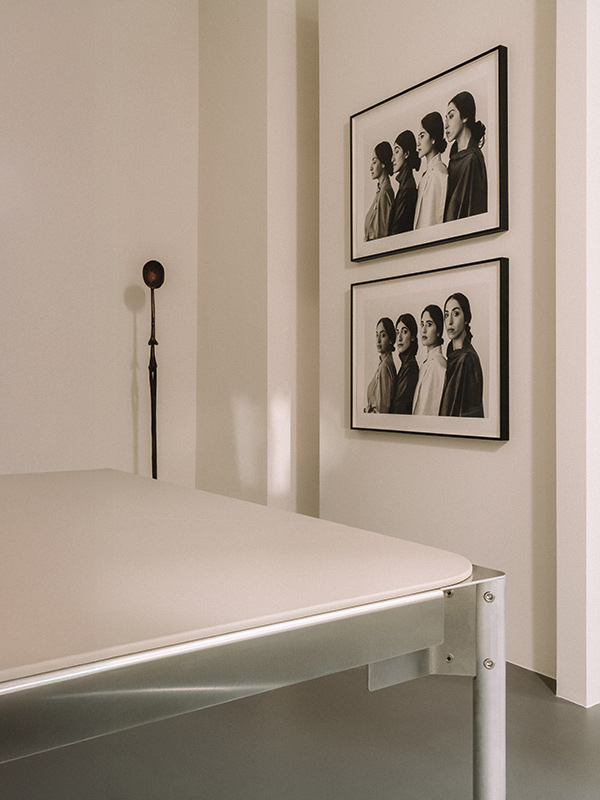
“True inclusion means sharing power, resources and responsibility and not just symbolically occupying individual positions.”
F: You opened your first gallery in 2015 and were an exception in the art scene due to your gender, origin and age. How has its diversity developed over the past ten years?
AS: When I opened my first gallery, there were hardly any young women in comparable positions and even fewer from non-Western backgrounds. Ten years later, things have changed, but the structures remain surprisingly homogeneous. There is more visibility, but not necessarily more participation. Many institutions stage diversity without really living it. Genuine inclusion means sharing power, resources and responsibility and not just symbolically filling individual positions. It worries me when diversity becomes an aesthetic or a trend. True openness is a process: it requires attention, listening, dialog and patience. I am interested in spaces where diversity is not staged, but practiced. Where different perspectives are not leveled, but are allowed to relate to each other. Perhaps this can also be understood as a kind of collective healing: the slow work on fairer structures, on trust, on encounters. I believe that galleries can be places for precisely this – places that do not depict diversity, but make it possible.
Q: When it comes to selling art, female creators are still severely underrepresented. Africa seems to be an exception. In 2023 and 2024, more sales were generated there with works by women compared to male artists. What could be the reason for this? And what needs to happen in general so that the art market represents all genders more fairly?
AS: In the African art market, female artists have achieved higher sales than their male counterparts for the first time in recent years – a remarkable moment. However, this is no coincidence, but the result of years of curatorial work, new collector circles and a growing awareness of female positions. Visibility has literally created value here. However, fairer representation requires more than market mechanisms: namely long-term responsibility and a genuine rethink. The art world must create structures that enable trust, continuity and fairness. Galleries, museums and institutions should actively assume this responsibility through acquisitions, mentoring, care structures and fair production conditions.
F: Bringing people together is an art all of its own. You are now practicing it intensively, for example by inviting people to cultural events and parties. How did this aspect become increasingly important in your work?
AS: For me, bringing people together is an expression of an attitude – an openness that aims for encounters, exchange and shared experiences. I grew up in a culture of hospitality – celebrations, music, eating together and conversations are a natural part of life in Iran. This open togetherness has shaped me, and after renovating my gallery space, I wanted to transfer precisely this energy into art: combining exhibitions with music, conversation and community. I am interested in how artistic spaces can function beyond pure representation or economic logic – as places of exchange that are not driven by market value but by dialog. I wanted to try out new contexts, create hybrid formats that celebrate versatility and resonance. Such spaces not only enrich artistic practices, but also the cultural fabric of a city. This is how “The Loft Presents” came about – a multidisciplinary series with music, performances and installations in which the audience is actively involved. I wanted to create a place where the worlds of art and music meet, where different generations and perspectives come together. At a time when polarization is increasing and many places of exchange are disappearing, I see this as almost a social necessity. I am inspired by the idea of David Mancuso’s legendary loft parties – bringing different communities together through music, openness and shared experience. I see a parallel between this and my work as a gallery owner: both are platforms for art, encounters and exchange. Femininity brings a special energy to such formats – one that is based on intuition, care and creative power. Perhaps this is precisely where their transformative potential lies. In an art world that is still strongly characterized by hierarchies and exclusivity, this form of openness and diversity is a necessary alternative. And yes – there are still far too few parties organized by women. I want to change that too.
F: What is the art of bringing people together? What do you pay attention to when planning your events?
AS: For me, the art lies in creating an atmosphere in which people feel seen and welcome. Each event has a clear intention and is curated like an exhibition: Which artists, which spaces, which energies come together? Natural, attentive hospitality is just as important. Everyone should feel comfortable and free. And it is essential that you really enjoy yourself at your own event. If you’re having fun, this is immediately transferred to your guests.
“In many contemporary works, I miss the aura that arises when idea, hand and ritual form a unity. “
F: Music has always played an important role in your life. What kind – artist, style, album – do you listen to when you want to concentrate fully on yourself?
AS: When I’m concentrating or working, I usually listen to classical music – Bach’s Goldberg Variations, “The Well-Tempered Clavier”, Beethoven’s string quartets, piano pieces by Brahms or Mahler’s symphonies. Miles Davis and Keith Jarrett’s “Köln Concert”, classical Persian and Indian music also accompany me. Traumprinz or the album “Dream 2 Science” also have a meditative effect.
Q: And what kind of music do you play when you want to connect with other people?
AS: When I play for others, I usually move between deep house, jazz and dub influences. I like warm, rhythmic, hypnotic music – sounds that create connection without being overpowering. It’s important to me to play music that I feel and love myself. When you are connected to the music, you can pass this energy on to others and create a shared moment. I recently recorded a set with Mike D for Bangkok Community Radio – an eclectic mix that reflects this openness.
F: Generative AI is also causing discussion in the art scene. Supposedly creative creativity is suddenly just a few clicks away. Some see this as the democratization of art, others its decline. How are you observing this development?
AS: I have mixed feelings about this development. Technological progress is exciting, but generative AI raises the question of what we actually mean by creativity. Art is more than the production of an image – it is experience, intuition, craft and attitude. If all of this can be replaced by a few clicks, we lose something essential. AI can be a tool, but it must not replace the human process. It is about preserving the awareness of origin, intention and responsibility.
Q: How can art also work on the internet without it degenerating into mere “content” that is viewed for a few seconds at most on social media and then swiped away?
AS: Art in the digital space only works if it retains attitude and depth. It’s not about producing “content”, but about creating resonance. Intention, context and authenticity are crucial – not just reach. Digital strategies can be useful if they focus on dialog and storytelling. Collaborative formats in particular show how art can also be experienced online as a collaborative process. Art loses its meaning when it becomes complacent or interchangeable. It needs vision, attitude and humanity – something that remains tangible beyond the screen.
F: How do you curate your own internet usage? Are there any sites or social media profiles that particularly inspire you?
AS: I am inspired by platforms that deal with culture, history, music or social change – such as Earthly Education. People who use their reach to stand up for justice and peace touch me far more than those who simply perform. Above all, I follow accounts that share knowledge, initiate discourse and open up perspectives. A mixture of critical journalism, cultural magazines and visual inspiration keeps me awake and connected to current affairs.
F: Your installation at Berlin Art Week was called “Soft Power”. This also refers to foreign influence on states through non-military means – for example through cultural role models. What inspired you to choose this name? And what do you think of the soft powers that currently dominate world affairs?
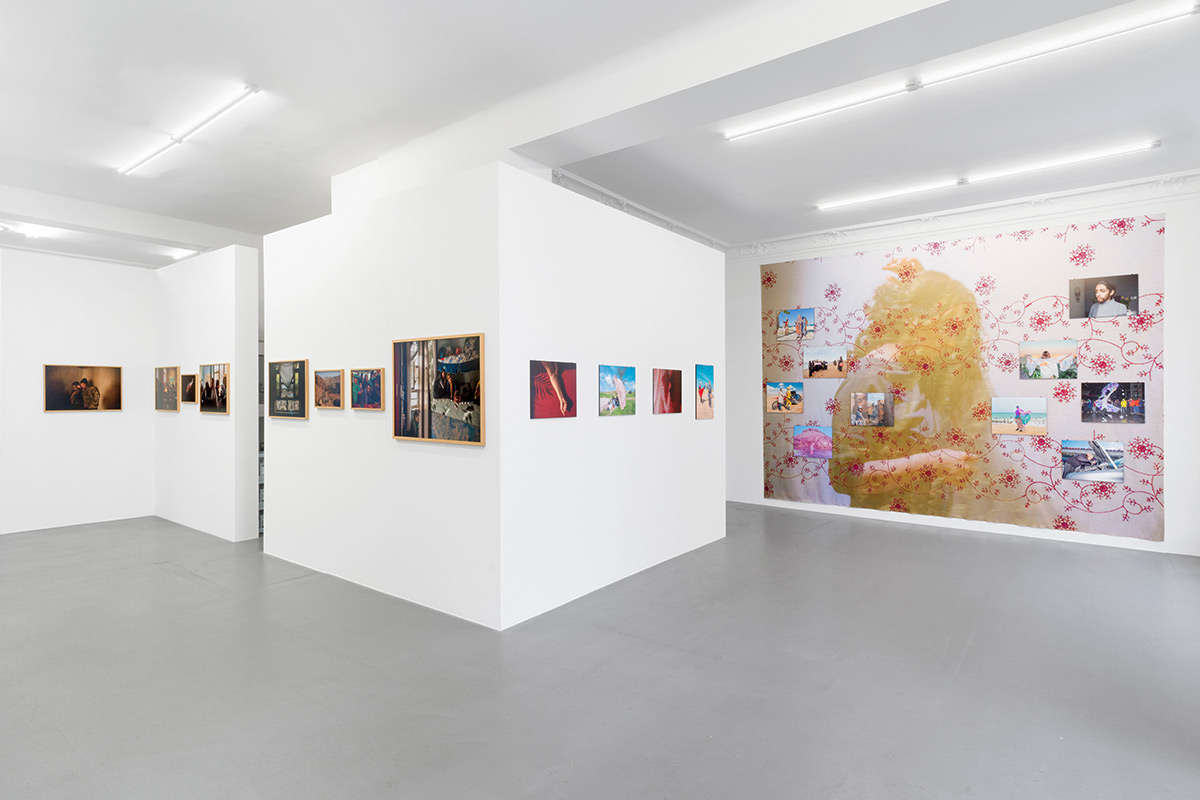
AS: The term “soft power” has left a lasting impression on me because it describes how influence can be created through culture, values and credibility. My installation “Soft Power”, which was shown during Berlin Art Week, transfers this idea to a cultural and social level. It is about promoting change not through confrontation, but through art, music, dialog and community. The project sees culture as a gentle but effective force – as a medium that connects people, creates resonance spaces and opens up new perspectives. At the center of the work are Persian amphorae from the 16th century. to 19. They are reinterpreted as carriers of collective memory and female resilience. They enter into a dialog with floral interventions by Laura Angelone and a 360° sound composition by Mehdi Behbudi, Vahide Sistani and myself. Inspired by the Iranian women’s rights movement “Woman, Life, Freedom”, the work reflects transnational feminist cultures of remembrance – experienced through sound, ritual and communal presence. I am interested in the female gaze, which is not characterized by patriarchy, but by empathy, mindfulness and responsibility. For me, soft power is a feminine attitude: powerful, but not aggressive; transformative, but not dominating. I believe in the healing power of art and culture. In a time characterized by fear, fragmentation and exhaustion, we need forms of togetherness that enable healing – individually and collectively. Art can open up this space, sensitize us and remind us of the essentials. At the same time, soft power is also a response to the global shifts in power that we are experiencing. Today, political, economic and media forces are often more subtle, but no less powerful than overt forms of violence or control. This makes it all the more important to counter these dynamics with alternative energies – those of dialog, education and compassion. I see Soft Power as a plea for connection instead of division, for listening instead of loudness, for transformation instead of stagnation – as an invitation to rethink the quiet forces of culture: as an instrument of collective healing, as an expression of hope and as the foundation of a more empathetic society.
“What we need is a foreign policy that is truly feminist, in the sense of care, empathy and responsibility.”
F: You were born in Tehran and you still have family there. How have you experienced the past three years, in which Iran has been shaped by the protests following the death of Jina Mahsa Amini and currently by the war in the Middle East?
AS: What has happened in the last three years has been deeply painful. The protests in Iran did not just begin with the death of Jina Mahsa Amini – they are part of a long continuity of resistance. As early as the 1980s, people, especially women, took to the streets for their rights. Their courage runs like a red thread through history: women who take the risk of raising their voices, supporting each other and standing up for the rights of others. The “Woman, Life, Freedom” movement, which inspired millions of people worldwide, was both a historic outcry and a collective moment of hope. Its echo was felt everywhere. But since Israel’s attack and the Twelve-Day War, repression has increased again. Sanctions and international isolation are weighing heavily on the population. They weaken civil society and at the same time strengthen the regime, a dangerous cycle that prevents change and undermines hope. Many Iranians feel abandoned, both by their own government and by the international community. What we need is a foreign policy that is truly feminist in the sense of care, empathy and responsibility. A policy that focuses on dialog, education and the strengthening of civil society forces instead of isolation and symbolic gestures. At the same time, a vibrant civil society has existed in Iran for decades, working towards a more democratic future despite censorship, surveillance and danger. These voices of women, artists and activists must not be silenced. However, the past few months have also shown how complex and contradictory solidarity can be. The stories and bodies of women in this region have long been instrumentalized – used to justify wars that are supposed to lead to their liberation. This shows how easily humanist values can be appropriated geopolitically. What concerns me is how selective empathy has become: how loudly people defend women’s rights in Iran while remaining silent when Palestinian women and children are bombed. And here I am explicitly referring to parts of the Iranian diaspora. These contradictions reveal that genuine humanism is not divisible. “Woman, life, freedom” must not remain a national or media slogan – it is a universal principle that only has meaning if it applies to everyone. What sustains me despite everything is the dignity of many Iranians who – despite censorship, fear and deprivation – continue to believe in a fairer future. There is something deeply poetic and spiritual in this steadfastness: a reminder that freedom is not a state, but a practice that we must constantly reassert.
Q: How have these political events changed you, both privately and in your work?
AS: The political events of recent years have had a profound impact on me – both personally and professionally. I feel a great sense of exhaustion, but also a new sense of responsibility. I can feel how much the political tensions are intensifying, not only in Iran, but worldwide and especially here in Germany. The shift to the right, polarized discourse, the erosion of empathy: all of this is putting our democratic culture to the test. What we all too often take for granted – peace, freedom, democracy – is in fact fragile and anything but self-evident. History repeats itself, frighteningly quickly. In this climate, artistic work inevitably becomes political. As a result, my work has become more radical in its thinking and more empathetic in its expression. I work more consciously with artists whose practice is based on integrity and attitude.
Many of my recent exhibitions have emerged from this inner urgency – “S*heroes”, “Cast Out of Heaven”, “Soft Power”. Our anti-war exhibition “In 36,000 Ways” was also a statement against violence and complicity. It confronted the public directly with the reality of war – beyond abstract reporting. It is important to me to show artists from regions whose voices are rarely heard in international discourse, especially from the Global South. I am interested in perspectives that allow for complexity and question stereotypical images. When people talk about women in Iran, for example, I don’t want to reproduce the image of the passive, suffering woman, but rather show strength, creativity and self-determination. “Woman’s Land” illustrates this vividly: the works celebrate solidary, courageous female protagonists and the duality of human existence – resilience and vulnerability at the same time. This period teaches me that art is not only an aesthetic but also an ethical practice. Perhaps love, in a deep, responsible sense, is the only formula for change: to cultivate, to learn, to multiply love. I want to work and live with people who create light and counter-designs – based on empathy, justice and connection. Ultimately, that is our task as cultural creators: To question power, take responsibility and create spaces where solidarity and compassion become social action.
“Art is more than the production of a picture – it is experience, intuition, craft and attitude.”
F: The political and social fronts are hardening. Ongoing crises seem to be driving people into two hostile teams that cannot agree on anything. In the USA in particular, institutions are taking the precaution of censoring themselves to avoid causing offense. Has it become more difficult to curate art and bring people together in this environment?
AS: The fronts are hardening and with them the challenge of curating artistic spaces and bringing people together is growing. I have the feeling that we are in a phase of social regression. There is so much suffering, so much war. The world is in flames and in the USA, as in Germany, we are once again successfully pursuing exclusionary and hateful policies. Recent public debates show how acceptable racist narratives have become again and how they continue to poison the social climate. At the same time, we are experiencing a regression in the ability to really listen and debate. Whether in politics, in the media or even in private. You are either for or against, friend or foe. There is hardly any room for the in-between. This polarization destroys the ability to engage in dialogue, trust and empathy. In Germany in particular, we have a historical responsibility to stand up for peace, human rights and cultural difference. However, we are doing less and less justice to this responsibility and this is also damaging the important fight against anti-Semitism. The growing tendency towards self-censorship in institutions and the politicization of the media is also worrying. If discourse is only conducted along the lines of buzzwords, we lose the space for nuances.
The current cancel culture worries me deeply: voices are discredited across the board without any substantive debate. In the US, for example, we are seeing anti-fascist groups being criminalized – a dangerous process that delegitimizes legitimate engagement and deepens division. But it is precisely in the midst of this obscuration that curating itself becomes a political practice. It becomes an attitude. It is not about being trendy or loud, but about creating long-term structures that endure: Places that generate resonance instead of just attention. As cultural practitioners, we have a responsibility to create spaces in which diversity is not a pose, but a lived reality. Safe places where people can exchange ideas, be vulnerable, discuss, argue and hope. Art can be both a bridge and a focal point here – a medium that connects, allows dissent and opens up new perspectives. The coming years paint a bleak picture. In this escalation, art becomes a necessity. We need places where people can meet, exchange ideas and heal. Healing becomes an art of survival and art itself becomes its tool.
Q: Despite everything, what makes you optimistic when you look to the future?
AS: Despite everything, I am optimistic because I feel that something is moving. We are living in a paradigm shift – old, often Eurocentric and patriarchal structures are losing their authority of interpretation. A new awareness is emerging that cultural work is not just about representation, but also about responsibility. I am hopeful that more and more people are realizing how much we need each other – that community, empathy and cooperation are not idealistic concepts, but survival strategies. Women and younger generations in particular are shaping this change with remarkable clarity and consistency. I believe in the power of collective intelligence and in the courage to question existing systems without falling into cynicism. If we learn to support each other, share knowledge and combine our work with mindfulness, real change can result. Authenticity, respect, humanity and honesty are not empty values, but sources of strength. They form my inner compass – and I believe that this is where the future begins: in returning to what connects us.
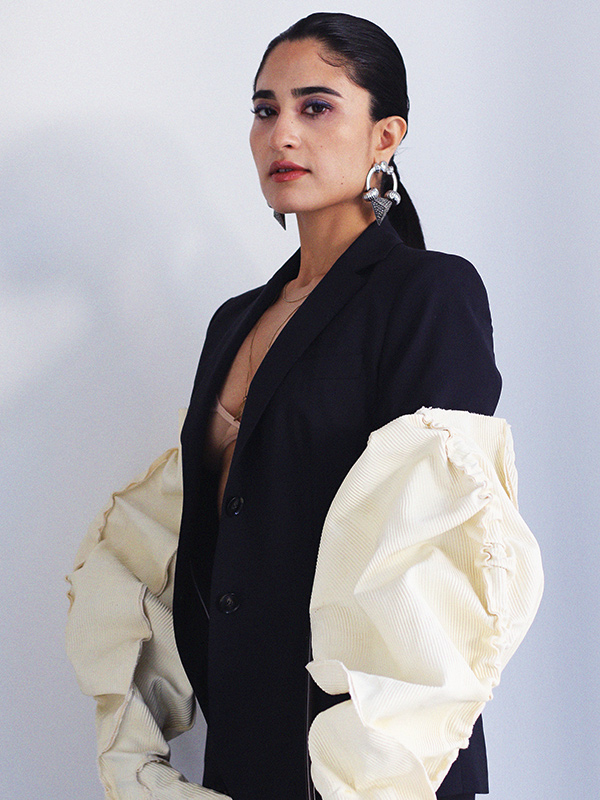
ANAHITA SADIGHI
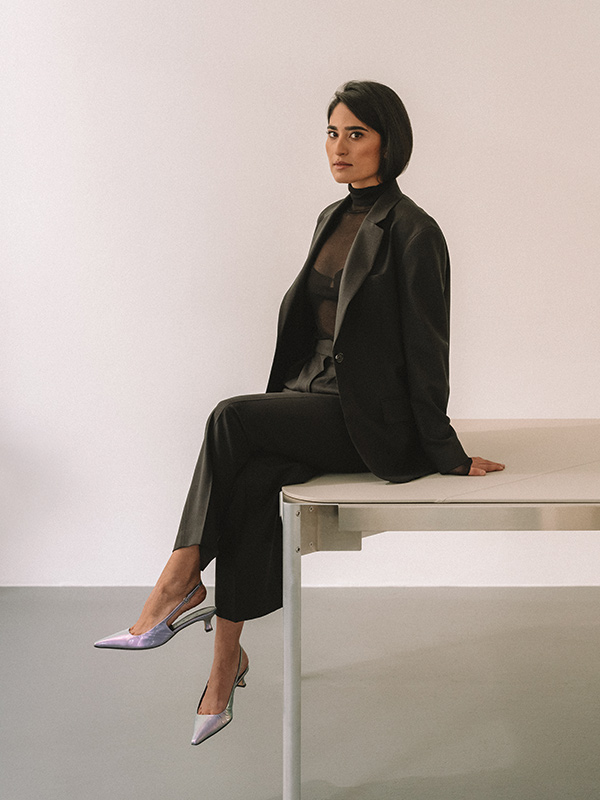
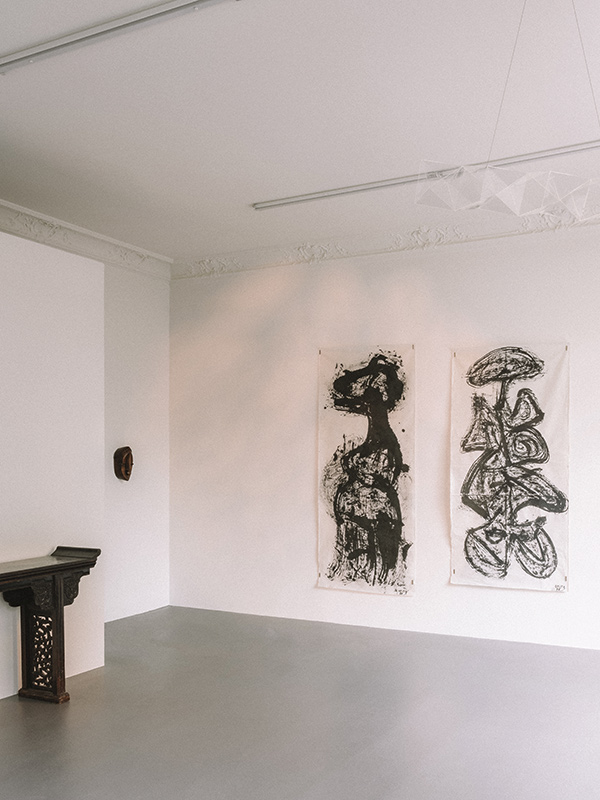
Galleries as places that do not represent diversity, but enable it: this is how Anahita Sadighi describes her vision. She opened her first art collection in Berlin at the age of 26. In the meantime, her gallery of the same name has become a meeting place. Not only for visitors, but also for art objects from various eras and regions. Anahita’s installation “Soft Power” caused a sensation at Berlin Art Week and with the event series “The Loft Presents” she regularly brings movement into the art world in the truest sense of the word – through parties, performances and interdisciplinary involvement of the public. anahitasadighi.com
You can find more art and culture topics here.
Find out what’s next for Anahita Sadighi here.
Photos: Akshita Garud, Clemens Poloczek, Roman März