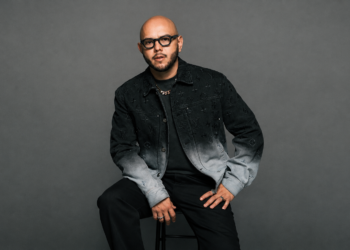


How do you talk about a case of abuse today, when the #MeToo movement seems to be increasingly perceived negatively again? Writer, director and actress Eva Victor provides the perfect answer with her feature film debut “Sorry, Baby”. With dry humor and nuanced emotions, she navigates her protagonist through the years following the incisive experience.

Credit: Courtesy of A24.
“Trauma porn” is not a category on illegal websites – although who knows? – but a term from film and media criticism for the glorification of the traumatic. In these cases, war, rape and the like are exaggerated and portrayed primarily for entertainment purposes, which is of little benefit to those actually affected, except at best re-traumatization. If one had to find a counter-definition of “trauma porn” in the form of a film, it would be Eva Victor’s “Sorry, Baby”, which she wrote the screenplay for, directed and starred in.
The trauma in “Sorry, Baby” is rape. But instead of burning it into the viewer’s retina, the 103-minute story with slight leaps in time is primarily about the aftermath, about moving on with life that does not have to be dictated by trauma and, last but not least, about the indestructible bond between two women that no romantic relationship could ever match.

Credit: Courtesy of A24.
The perpetrator is rarely a stranger
Eva Victor plays Agnes, a prospective professor of English literature. She stands out from her small group of fellow students with her writing talent. When her professor (Louis Cancelmi) moves a meeting about Agnes’ dissertation to his home, it becomes clear that he has taken a liking to more than just her intellect.
Eva Victor’s narrative and visual choices should go down as a prime example of how sexual assault can be portrayed on screen. You don’t have to see the rape to understand its severity. Static shots of Professor Decker’s house changing from afternoon to late night, a confused Agnes stumbling out the door, hastily slipping into her boots and hurrying to her car: Enough said.
Once home, Agnes tells her best friend and flatmate Lydie (Naomi Ackies) in detail what happened. The two come to the conclusion that it was indeed a rape, or as they call it – The Bad Thing.
Eva Victor demonstrates a sense of reality that is rarely seen in other films. The rapist is not an evil stranger, as is usually propagated by the media and society in order to avoid having to come to terms with the fact that the perpetrators are just the nice guys around the corner. He is a pleasant, almost shy man from Agnes’ close circle. And one who, as her mentor and professor, has power. There are no consequences for him – he quits and is gone the next day. As a result, the university can no longer initiate prosecution. The matter is off the table for everyone. Except for Agnes, who doesn’t lose her dry sense of humor, but is increasingly confronted with fears and quietly simmering panic.

Credit: Courtesy of A24.
Before and after
The years that follow are not limited to Agnes’ trauma. She completes her doctorate and takes over her abuser’s position and office. She lives on.
Lydie and Agnes’ lives develop at different speeds and in different directions. None of this changes their close friendship. The movie opens with a reunion between the two, showing that this friendship runs like a thread through the entire story.
Eva Victor’s directorial debut comes at the perfect time. The #MeToo movement is hardly taken seriously anymore, convicted sex offenders rule the world and nobody really seems to care. This story shows that not only do perpetrators hardly feel any consequences, but also that the lines can become blurred. Agnes once says that she doesn’t really want her former professor to end up in prison. And yet it is she who is still struggling with this years after the incident. Paradoxically, when she doesn’t think about the incident, she almost feels guilty, and when the experience still haunts her years later, the same is true: a tricky scenario that survivors of violence are confronted with every day. But instead of ending in despair, “Sorry, Baby” ends with the most heartbreaking monologue. Agnes looks after Lydia’s newborn baby and assures her that she will be able to turn to her with any problem later on. Once again, the bond between women holds the world together.

Credit: Courtesy of A24.
You can get a taste of the story here.
If you’re in the mood for a series marathon rather than a movie, we can recommend “Too Much”.