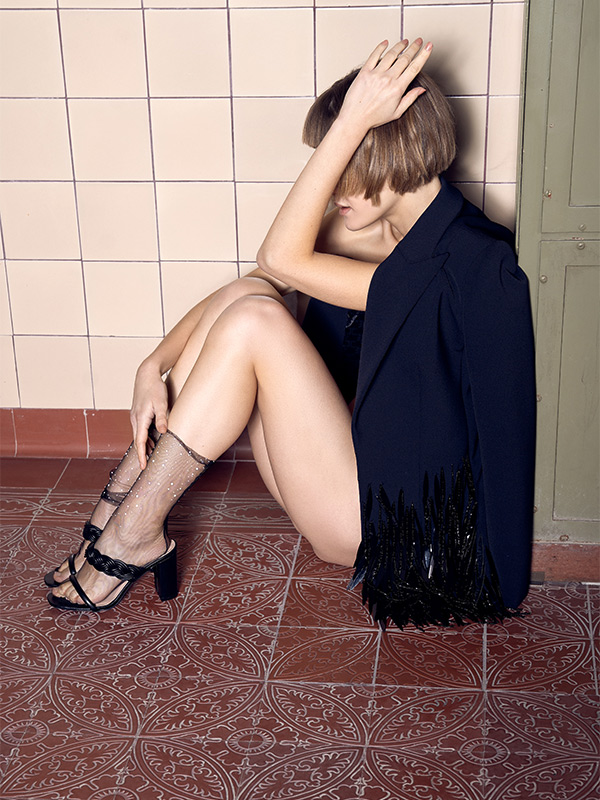

Milan, Paris, London – St. Gallen? The tranquil little town in eastern Switzerland is admittedly not a fashion metropolis. But for over a hundred years, it has been the source of fabrics and embroideries for which the world’s major fashion houses sometimes send an express pick-up service. A visit to the textile company Forster Willi shortly before the spring/summer fashion weeks not only shows how archive and tradition merge with modernity, but also how filigree textile works of art are created under high pressure, setting trends on the catwalks of this world.
A rainy, gray day at the end of August on the outskirts of St. Gallen: Not exactly the place one associates with the upcoming Fashion Weeks in the world’s fashion capitals. But behind the doors of the concrete building that is home to Forster Willi, the company has been designing, embroidering and tinkering at full speed for weeks – for houses such as Chanel, Miu Miu and Louis Vuitton. The textile company specializes in embroidery for haute couture and prêt-à-porter. However, just three weeks before Fashion Week madness kicks off, nobody knows whether any of the embroidery designs will actually end up in the final designs and therefore on the catwalks. “It’s possible that three looks will be removed an hour before the show,” says Elisheva Senn, Creative Director at Forster Willi, who has known the textile and lingerie industry inside out for over twenty years. The fast pace and unpredictability of the industry are therefore no match for her. So it no longer comes as a surprise to Senn when a Chanel delivery service jets straight from Paris to her door in St. Gallen to pick up a fabric sample that was ordered the day before.
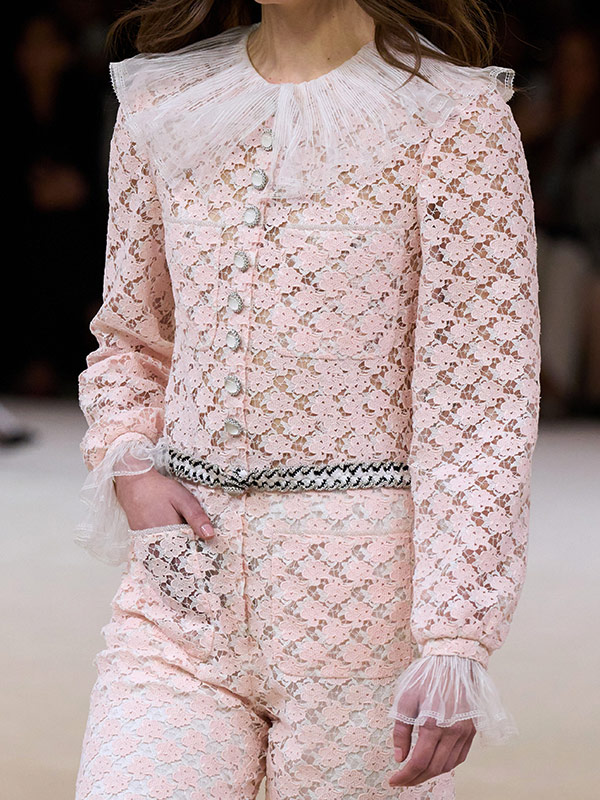
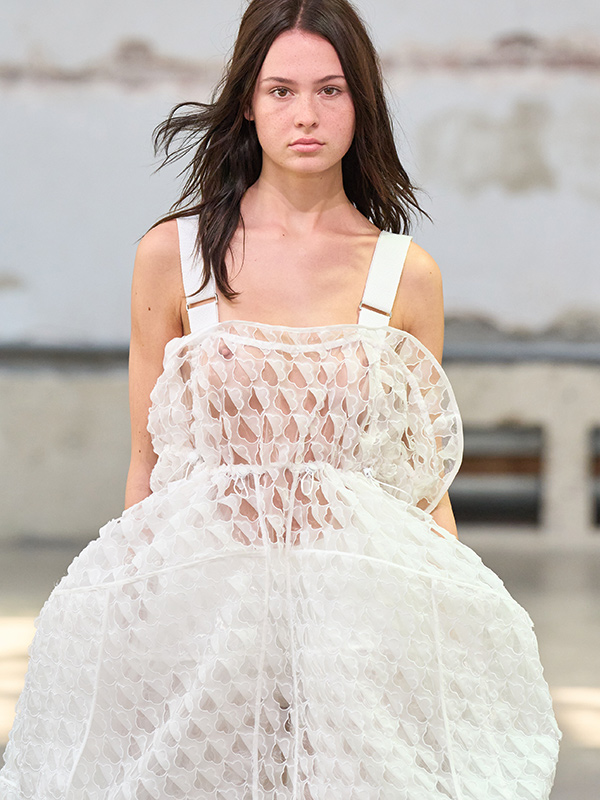
It is not only suppliers who find their way to St.Gallen, but also one or two design greats who prefer to get their inspiration locally. Maria Grazia Chiuri, who left the Maison Dior this year after almost a decade, has already been a guest at Forster Willi and enjoyed browsing through the archive. “Maria Grazia Chiuri loves everything archival, everything that has patina and is characterized by irregularities and imperfections,” says Senn. Reproducing such archive designs on request is not always so easy. After all, what used to be manual work is now largely carried out by machines geared towards perfection, which completely eliminates small irregularities. But there are always solutions: “Here in St.Gallen, we see ourselves primarily as an innovation hub,” says Senn. Instead of mass production, the main focus in St. Gallen is on translating the designers’ visions into embroidery – and working with new materials in order to stand out in the business and remain relevant. Her motivation is to cover all possible techniques. Every machine has different attachments, from sequin attachments to soutache and normal thread. Above all, there must be enough material available so that a prototype can be created for every conceivable customer request within a short space of time. This seems to work well, as Forster Willi’s customer list is long. Japanese designer Rei Kawakubo also came to St. Gallen in search of inspiration for her label Comme des Garçons. And Forster Willi was already working with high-flyer Cecilie Bahnsen when she was still in an assistant position. The playful floral designs that we know from Cecilie Bahnsen often come from Forster Willi. This season, the Danish designer has once again included embroidery from St. Gallen in her collection.
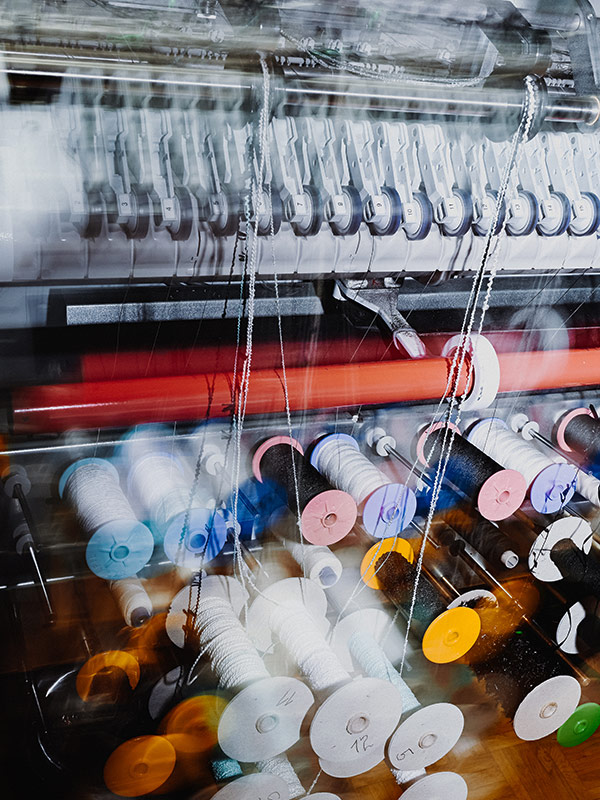
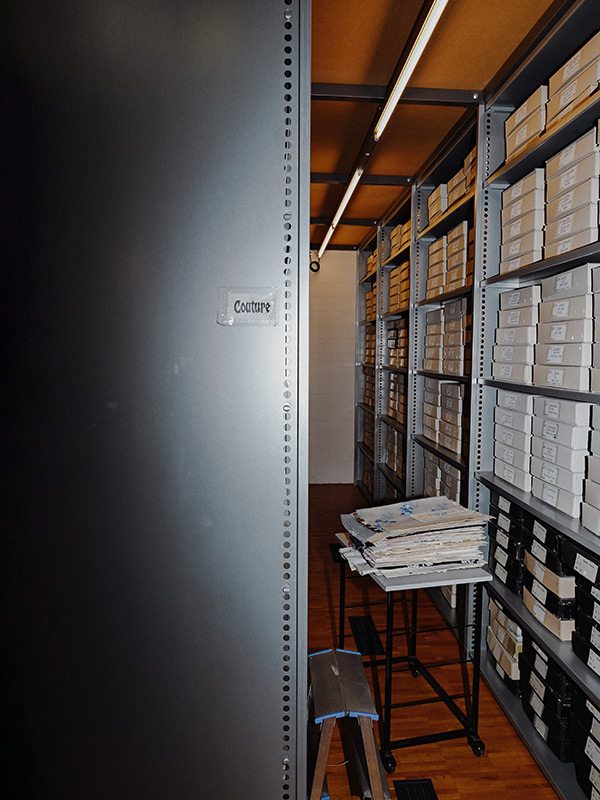
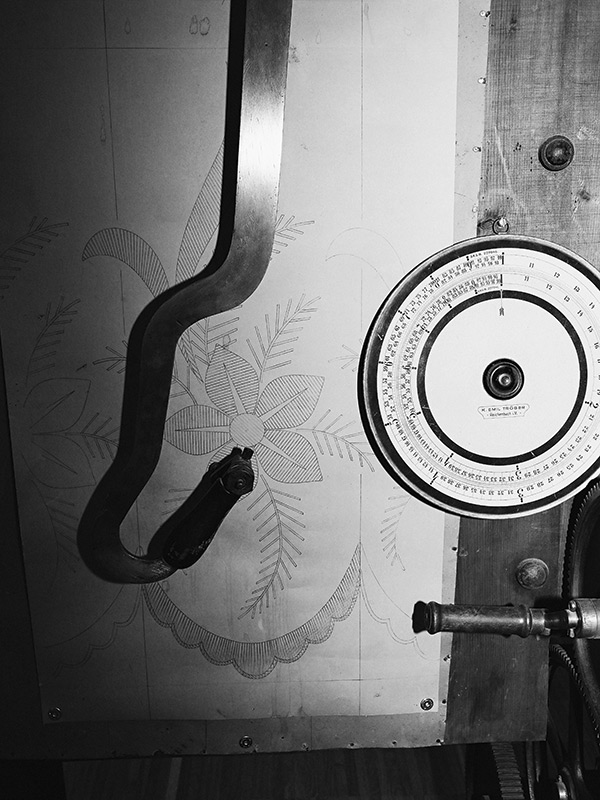
Anyone who has ever set foot in the archive knows why the designers come here. Over two million pieces of fabric and embroidery are neatly stored in books weighing several kilos. Archiving began in 1938 with the couture books. Every single season, everything that was on the catwalk is illustrated: with a photo of the garment and a sample of the embroidery. “It’s actually a museum, but we don’t treat it like one, we work with it,” says Senn. Instead of letting the books gather dust, they serve as a source of inspiration. Another museum piece in the archive: The shuttle embroidery machine from 1886. The system for embroidering today is still the same. “You have a frame that moves. It’s never the needles that move,” explains Senn. Today, it is software in which the punchers create coordinates for each stitch, which are then implemented by the embroidery machine. As everywhere else, industrialization has brought speed. Production is now many times faster than the original machine.
TIME TRAVEL THROUGH THE ARCHIVE
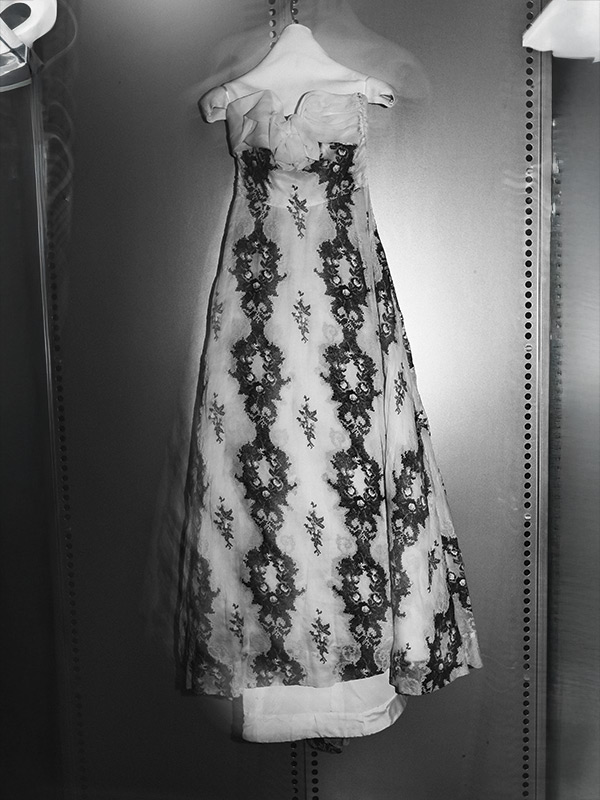
Not only catwalk moments are stored in the archive, but also pop culture events where Forster Willi contributed a look. “Sometimes we become part of a historical event without knowing about it,” says Senn. For example, it was only when the press photos of Barack Obama’s first swearing-in went around the world that she spotted that Michelle Obama’s outfit featured guipure, i.e. classic embroidery, from St. Gallen. “Designer Isabel Toledo ordered it back then,” says Senn. Amal Clooney also wore Forster Willi on her second wedding anniversary, and Pippa Middleton even got married in it. Elisheva Senn opens an archive book from 1953, with well-known names on the page: Cristobal Balenciaga, Schiaparelli, Givenchy. In addition to the countless books, there are a few dresses hanging in the archive, including some by Givenchy and Yves Saint Laurent. These come from Doris Forster, the grandmother of Emanuel Forster, who is the fourth generation to run the company. “She bought and wore these clothes herself,” says Senn. “She was practically one of the first influencers,” she adds and laughs. Because she tried to make Parisian haute couture socially acceptable among the wealthy here in St. Gallen.
Let’s take a ten-year leap in time and scroll through the year 1963. Colors and cuts are gradually beginning to change. Back then, no one at the fashion shows held up their smartphone as soon as the first model took a step. There were no fashion influencers commenting on every look from the comfort of their own homes. In other words, only those who were actually invited knew what to buy and what to wear. So it happened that in some seasons, certain houses used the exact same embroideries from Forster Willi. “Monsieur Dior and Mademoiselle Chanel were arch enemies,” says Senn. And turns to the relevant pages in the book: Both houses needed the exact same embroideries. He with a collar, she with a skirt. “That would be unimaginable today,” says Senn. Today, people pay attention to who has which of the countless books from the archive in their hands, so that similar things are avoided. Another leap into the next decade. In 1973, embroidery began to struggle. At the time, Forster was competing with Schlaepfer, both of which were feeling the effects of the crisis. To save money, they both booked the same photographer – none other than the young Helmut Newton. His signature is so unmistakable that it can be recognized from afar in the archive books. Also because he brought the same poodle to the set of both Jakob Schlaepfer and Forster Willi. According to Senn, it was apparently the most expensive part of the whole shoot.
When looking at the heavy books, one question inevitably arises: Is there any way to digitize such an archival treasure? And do you have to? “We are photographing everything,” says Senn. This is mainly to speed up the initial research. After all, a picture on a screen can’t keep up with the books in which pieces of fabric and embroidery can be touched. “Designers in particular want to feel and see the textures. That’s why we send half our archive around the world,” says Senn. Never without a GPS tracker and an employee, of course.
EVERYTHING BEGINS WITH A DRAWING
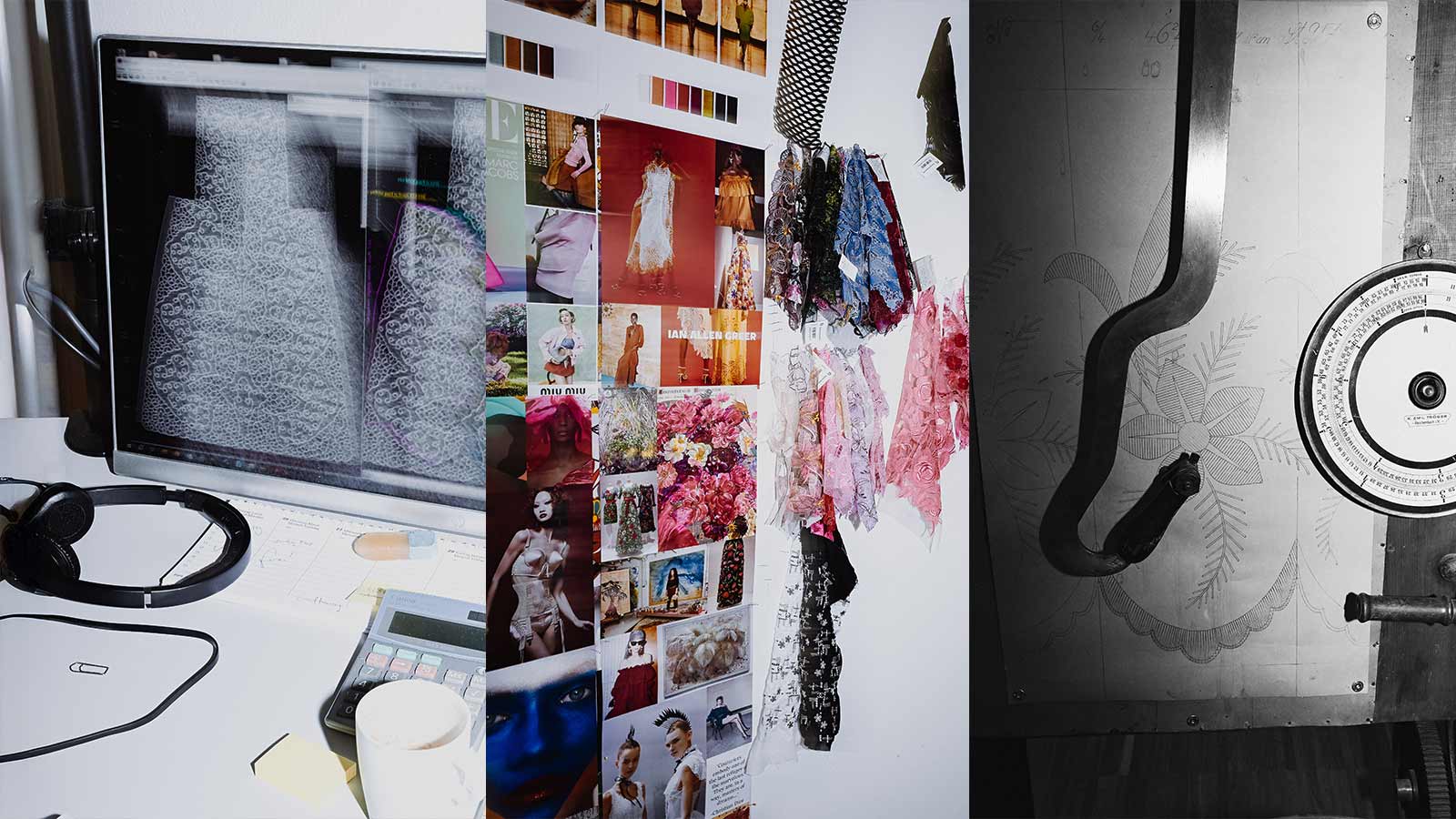
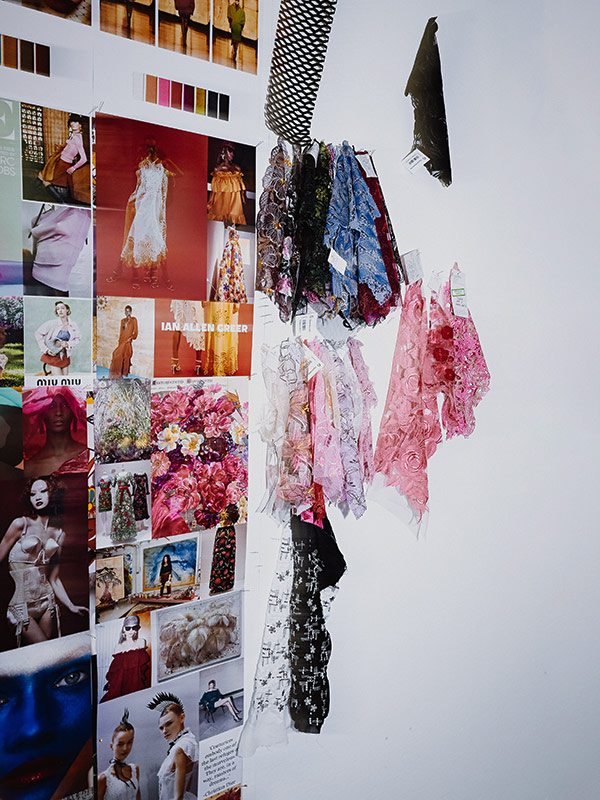
Before the embroidery machines are programmed, the designers’ ideas and inspirations from the archive have to be transformed into a design. This is done the old-fashioned way with a drawing – even though computers are omnipresent in the design sector. Mood boards with printed photos and individual pieces of fabric hang on the walls and colored pencils are scattered around the table. “We can’t avoid drawing by hand,” assures Stefan Koller, who is currently refining a drawing on the screen. Reassuring to hear in times of AI madness. Technical and creative skills are still essential. “Photoshop is used almost exclusively to preserve the dynamics of the individual designers’ strokes,” says Senn. This is because it is still important to be able to read a person’s handwriting from the design. “The hand drawing brings in a DNA, a life, while at the same time a gigantic technical understanding is required,” says Senn.
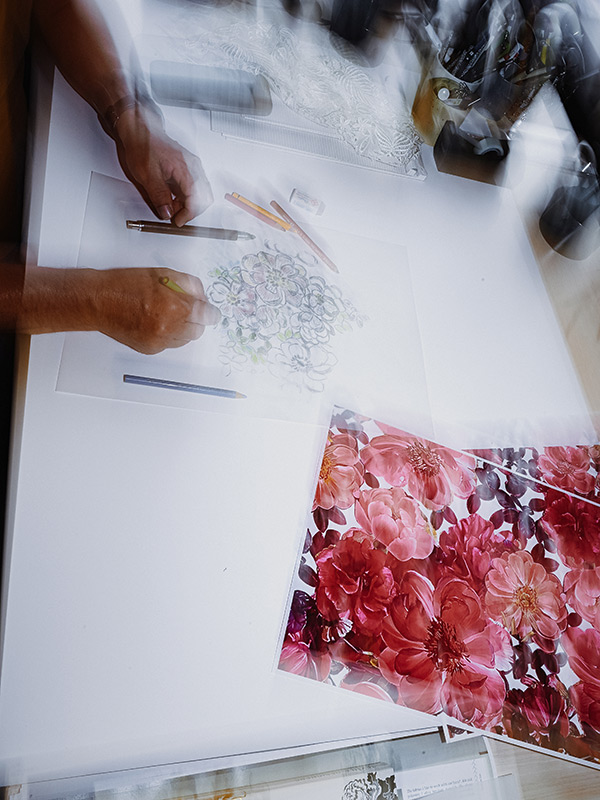
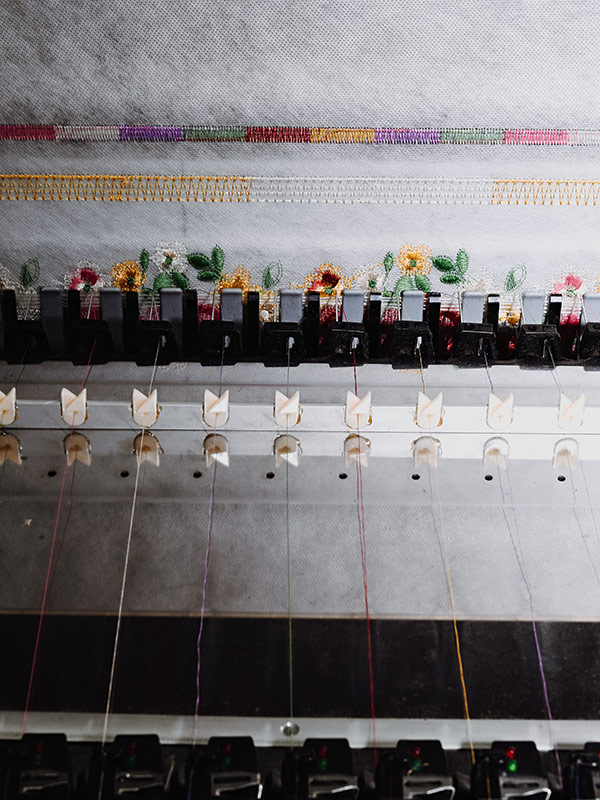
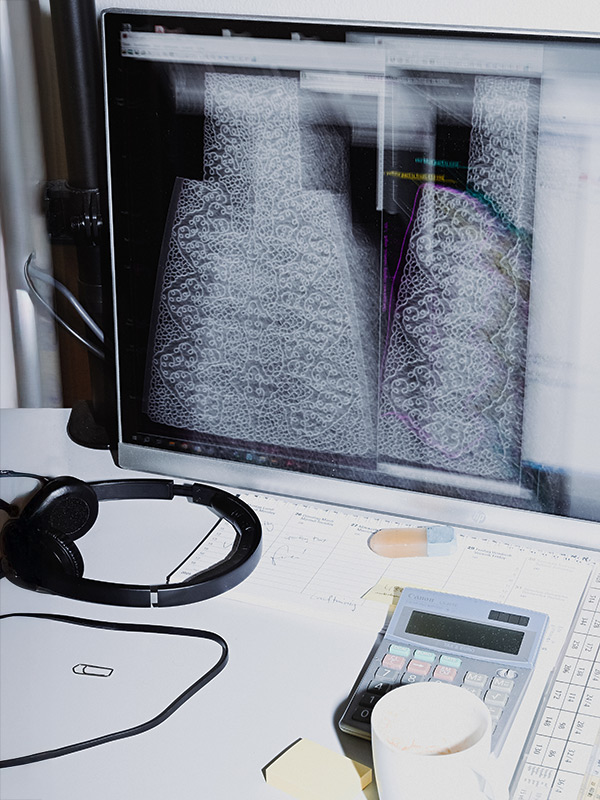
Even if the customers’ budgets are large – the embroideries are bought even if they are not needed afterwards – realizing their wishes affordably remains a major challenge, according to Koller. He zooms deeper into his wild patterns on the screen. The shape is reminiscent of an apron. The order comes from Miu Miu. At the time of the visit, nobody knows yet whether this embroidered apron piece will become anything. Anyone who followed Paris Fashion Week closely will know: Miuccia Prada has once again set a trend. The Miu Miu catwalk was full of skirts and aprons – many of them made from Forster-Willi embroidery. Once a design is finished, it is punched. This is not as brutal as it sounds and once again takes place on the computer. In other words, each individual stitch is programmed so that the embroidery machine then takes over the work. In the specific case of the Miu Miu apron, this means punching for almost a month. As a layman, what you see on the screen is mainly a collection of lines. Around 350,000 stitches have to be pre-programmed for the 90 by 60 centimeter Miu Miu pattern. Up to four people often work on one piece, which saves time but also creates further difficulties, as everyone has their own handwriting when punching. “It takes an incredible amount of concentration,” says Senn. “The punchers have a knife to the throat all the time: it has to be done quickly, the patterns are complex and you can’t afford to make mistakes.” These mistakes, which sometimes do happen, are only recognized when the pattern is removed from the machine and doesn’t hold. “But the customers don’t notice this,” says Senn.
ANDATE DAI SVIZZERI
From the summer to the spring/summer 2026 show in October, where the Miu Miu apron skirts were shown, a lot has happened – including frequent changes and new ideas. “I’ve been working with Prada and Miu Miu since the beginning of July,” says Sales Director Davide Greco. In his case, busy means: daily WhatsApp messages, not from Miuccia Prada herself, but from her right-hand man, as Greco calls her. He has known her for twenty years, which makes his work easier. “Signora Prada doesn’t actually like embroidery,” says Greco. It’s been a while since she brought embroidery to the catwalk for Prada. Forster Willi last worked intensively with Prada in 2008 and 2012. “It feels similar to back then,” says Greco, who already seems to sense that the designs will not be discarded this year, but actually incorporated into the designs. This year, she was in the mood for classic guipure. “If she does want embroidery, Signora simply says: ‘Andate dai svizzeri’ – go to the Swiss! Then her assistants know that she means Forster Willi,” says Greco. Signora, as Greco affectionately calls her, didn’t make the trip to St. Gallen herself, but was determined to get the books from the archive. “For Signora, too, the books are museum pieces. Either you come up or I come down,” says Greco.
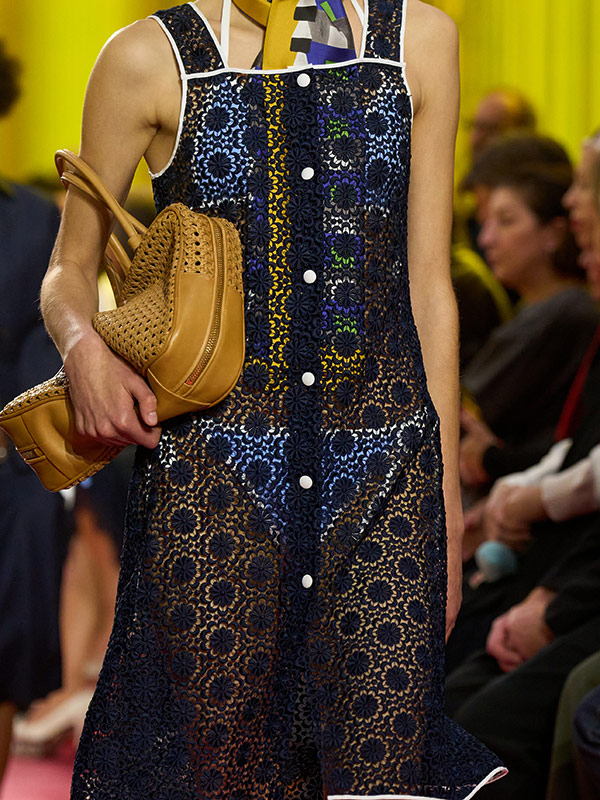
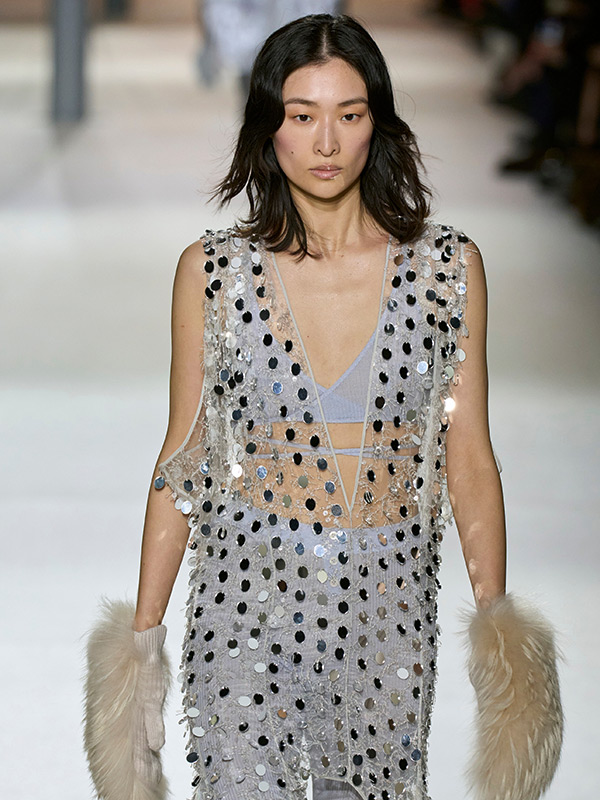
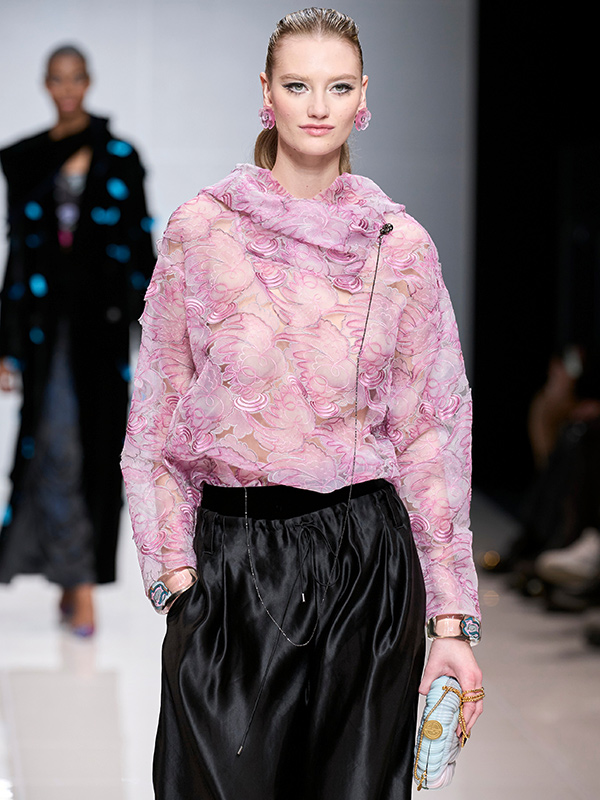
Vice President Sales Ahlem Hamzic, who looks after some of the fashion celebrities during the stressful pre-fashion week period, had a similar experience. “I had a delegation of five people from Louis Vuitton here,” says Hamzic, “who all really wanted the books too.” They were fascinated by classic embroideries from 1920. When the creatives saw that the original had absorbent cotton in it for a 3D effect, they wanted their pattern to be exactly the same. “Creativity knows no bounds,” says Hamzic. She is delighted that fashion is bringing in a lot of color in the coming season. “We have a dark world. That’s why I see a lot of color, especially among the French,” says Hamzic. In Paris, a design finally landed on the Louis Vuitton catwalk.
Greco finally selected four books for Signora Prada and traveled to Milan. Signora promptly wanted to keep the books. “But that’s only possible under the supervision of my agent,” says Greco. “I cherish these books and Heritage like nothing else. I practically grew up in them,” he adds. The strict regulations meant that Greco was allowed to drive his car into the Prada courtyard – a privilege that suppliers are otherwise not allowed to enjoy. Signora decorated the heavy archive books with all kinds of Post-Its, which are still stuck to the books weeks later. “She wrote here: Silk tulle, just like there… I can’t read that. It says 130 cm,” Greco reads out. Even if much remains cryptic, Miuccia Prada’s vision, which could be admired at Paris Fashion Week, quickly crystallized: cheerful colors, traditional embroidery, but brought into the modern age. “It’s nice that she brings in such cheerful colors in times like these,” says Greco.
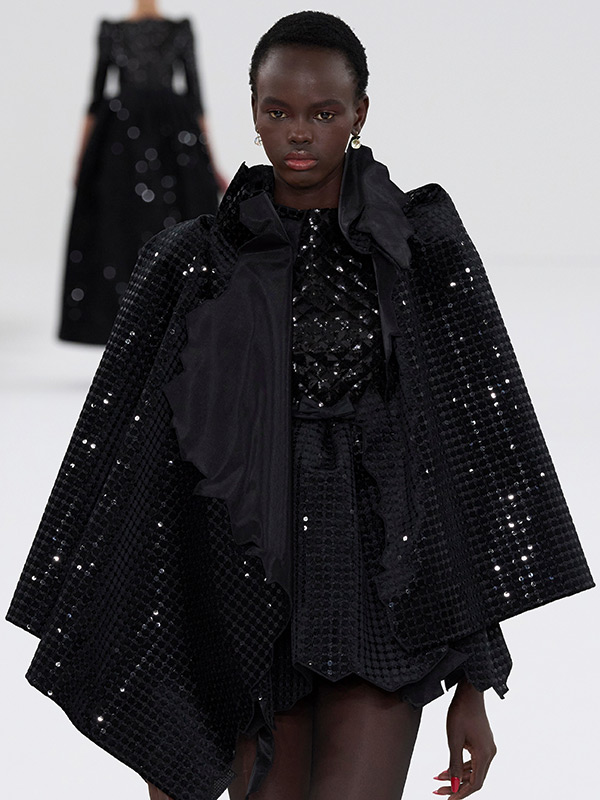
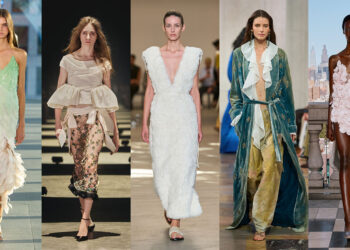
Several sample productions and archive book exchanges had to take place before the vision was finalized. “We immediately programmed the machines and made samples of the archive designs that Signora selected. She wanted to have everything from the archive reproduced,” explains Greco. “But when she sees something new, she also wants to see and compare the old ones from the archive. That means packing up the books again and heading off to Milan. At some point, Greco met the agent in the middle so that both parties could save time. At San Bernardino, between the police and the Socar petrol station, archive books were loaded from one car into the other as if in a highly secret deal. It went on like this until Signora Prada’s summer vacations: new ideas were added every week, new dimensions, new colors. Signora would usually go on summer vacation and then come back with completely new inspiration, so that everything was thrown overboard and almost started all over again. “If Signora wants something, she does it without asking about the budget,” says Greco. The apron-like skirt, which was worked on for weeks in production, was recognizable on the catwalk in multiple versions. In the case of Miu Miu, the effort paid off across the board: Forster Willi created a total of 13 looks. In general, embroidery from St. Gallen had a good run on the spring/summer catwalks in Milan and Paris this season. We can be sure of that: Innovative and colorful embroidery from rainy Eastern Switzerland will also be carried out into the world at future fashion weeks.
FORSTER WILLI
From Chanel to Louis Vuitton, from Cecilie Bahnsen to Comme des Garçons – the fourth-generation family business Forster Willi has been supplying the fashion world with embroidery for haute couture and prêt-à-porter for over a century. In its home town of St. Gallen, the company not only fulfills customers’ wishes, but also thinks ahead in innovative ways so that designers can be sure that their ideas will be fulfilled: There are virtually no limits to embroidery.
Take a look here if you want to find out more about the world of embroidery.
Photos: Josefine Zürcher, Launchmetrics SpotlightSM
Infected by fashion fever? Read our Paris Fashion Week Report.