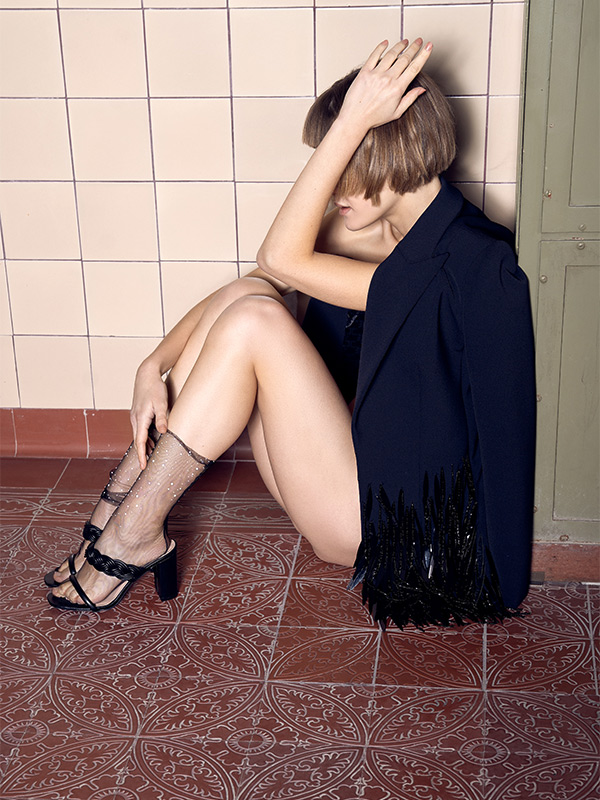

As a costume designer, Aino Laberenz ensures that film and theater characters slip into the right textiles. In her private closet, she likes things to be pragmatic and masculine. In this interview, Aino reveals what other influence her work has on her personal style, how she currently perceives the creative industry and what she would change about the world of theater.
FACES: In the world of theater and film, the spotlight is often on actors and directors. Why do stage and costume design deserve more attention?
Aino Laberenz: Because they are an important part of supporting the stories that are told in film and theater. The costume is the actors’ first space. It connects the chosen time and the background of the story and supports the visibility of the characters.
Q: To what extent do you see fashion differently as a costume designer than, for example, as a designer or simply a wearer?
AL: I don’t really know. Maybe I am both. But my eye is certainly more trained when it comes to cuts or fabrics.
“Costume design is a form of storytelling.”
Q: How do you best express the emotional state of a film or theater character through clothing?
AL: For me, costume design is a form of storytelling that not only gives the film or play another color, but also supports it. In both theater and film, the development of a character is always tied to the content. Does a character make a career or does he become unemployed? You can tell the rise and fall of course in costume. You can tell the status and origin, the age, the environment or the culture. In the costume, you can express this with colors or shapes, for example with how tight or loose an outfit fits.
F: “Wuthering Heights” is currently causing controversy, also with regard to the costumes. This also applies to “Bridgerton” – the series has often been accused of not taking history seriously enough. Do costumes always have to be historically accurate? What scope is there for creative freedom?
AL: Film is not a documentary, but has artistic aspirations. Equating art and reality is a problem. I can’t believe theater or films – not documentaries – that claim to depict “true reality”. But I would say that the representation of a reality on stage is a reality. Theater, but also film, can confront the audience with the reality of their own lives. And that is an important reason for me to create art.
F: How would you define your personal style? Which designers particularly inspire you at the moment?
AL: My personal style is more practical and probably also more masculine. I like masculine details such as suit pants, blazers, shirts and flat shoes and tend to wear fewer heels. I always combine pieces from my wardrobe in different ways. And I tend to wear the same jewelry. In my job, however, I look for clothes or design for others, which means I’m constantly looking at other bodies. That’s probably why I’m more pragmatic myself. I like to be comfortable and have to be able to move easily. I like Comme des Garçons, their show is always something special. And of course I’ve looked at Prada and find it exciting what Demna is doing for Gucci. I like Jil Sander and Simone Bellotti is doing a great job. In Paris, Alaïa was really great. I love how precisely Pieter Mulier works with and on the body in his cuts. Then I always look forward to Miu Miu and Chanel. But apart from the big brands, I also like Hodakova and Julie Kegels.
Q: And how has your personal style changed over the years?
AL: My clothes evolve with me, even if it’s a pair of jeans I’ve owned for ten years. I love pieces that I sort of live in. There are pieces that protect me or that cheer me up. But sometimes a piece lies in my wardrobe for a long time and then I dig it out again and wear it to excess, perhaps by discovering and combining a different color on myself.
F: Your style and you yourself are often described as serious. Does that bother you or would you describe yourself in the same way? Is there still humor and irony in your visual style? Work?
AL: I didn’t know that my style was described as serious. And the reason I’m described that way is because I laugh less in photos. But I would describe myself as cheerful, and of course there is humor in my work. I couldn’t be without humor and laughter. It’s an important driving force and an important part of art.
F: You once said in an older interview that you never wanted to be in the spotlight. How does it feel to be in front of the camera on shoots – like the one for us now?
AL: That has changed for me. Not that I seek the limelight now, but it has become much easier for me. And when I trust someone behind the camera or a bond develops, it can be a lot of fun. Humor can also help. For example, I don’t have a “camera face”. So I just try it out. It’s not bad or uncomfortable. I used to be much more intimidated.
F: How would you describe the current state of mind in the creative industry? Do you sense any hope?
AL: It is an extreme time in which we live. Art always reflects our society. But I am a person who always has to believe in something and also has hope. I would always fight for the freedom of art and for art to be a language when, for example, politics no longer has one.
Q: What would you change in the theater and film world immediately if you could?
AL: Provide more money. And there needs to be more respect for each other.
F: Where do you want to take your work in the future? Is there anything you urgently want to tick off your bucket list?
AL: I’m happy that I’ve gotten more into film in recent years and I want to continue to do so. And I just love working, love my job as a costume designer and want to be able to keep growing in it.
Aino Laberenz
She has the look for every occasion: as a costume and set designer, Aino Laberenz knows what clothes and settings need to be able to tell a story properly. She has worked at the Schauspielhaus Zurich, the Volksbühne Berlin, the Vienna Burgtheater and the Berlin State Opera, among others. She is the managing director of the Operndorf Afrikas in Burkina Faso, which was founded by her husband, the theater director Christoph Schlingensief, who died in 2010. @ainolaberenz
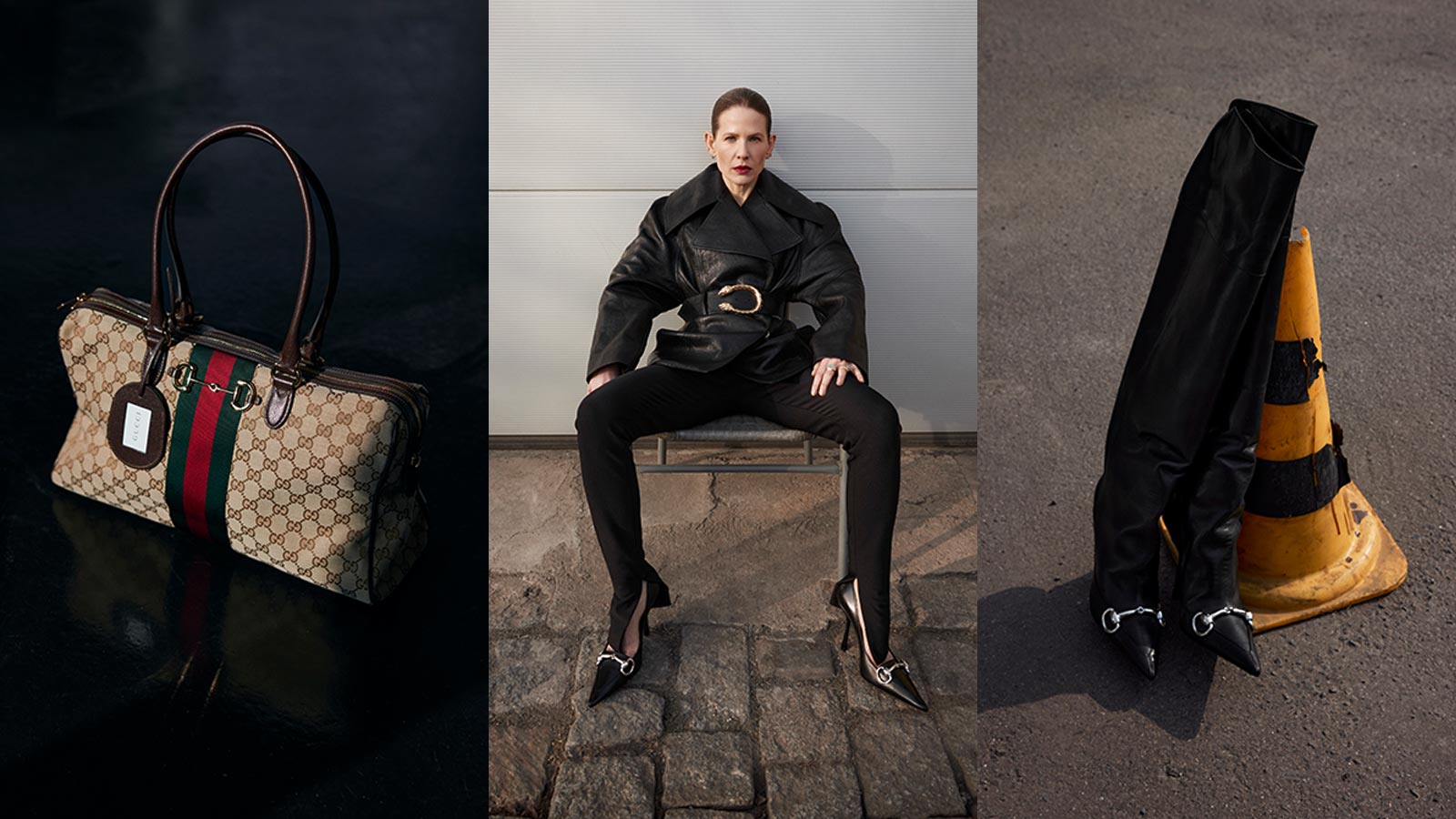
How does Aino Laberenz look dressed from head to toe in Gucci? Great, of course. Watch here.
Stay up to date with Aino Laberenz here.