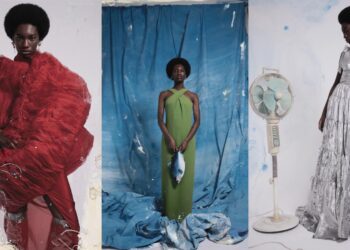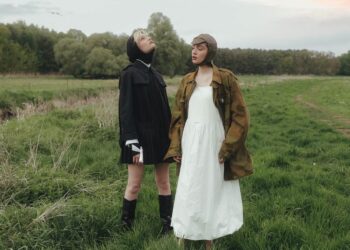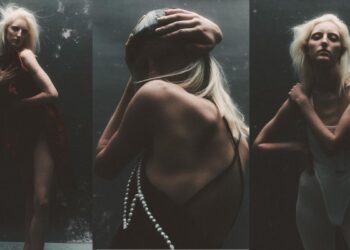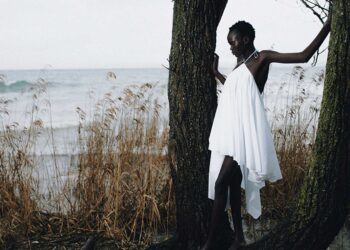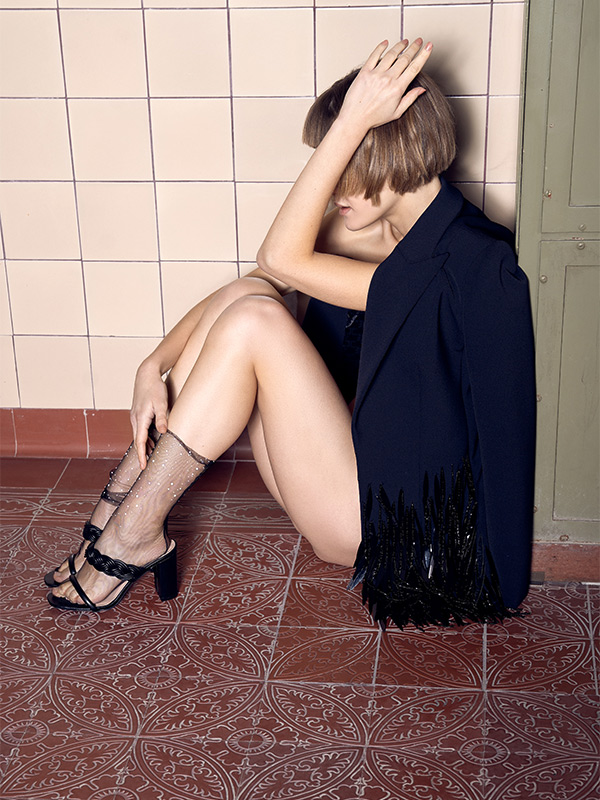

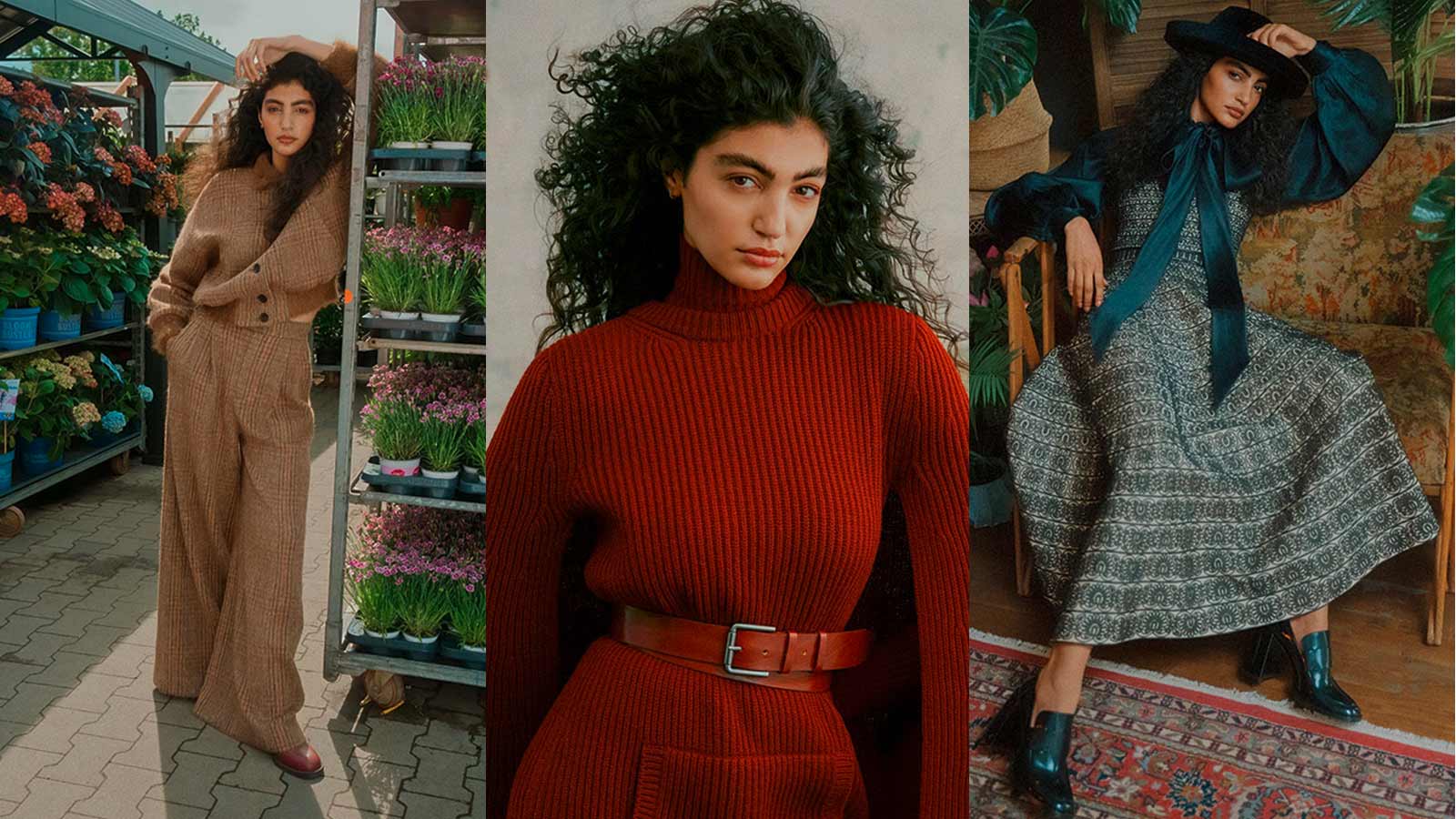
In 2021, she was the high flyer on “Germany’s Next Topmodel.” But Soulin Omar is much more than a former contestant on a casting show. At the age of eleven, she fled Syria with her family. After initially settling in Turkey, the family finally arrived in Hamburg. Soulin likes to talk about her origins and history. Because even though her days are now mostly filled with photo shoots and catwalks, she wants to convey to others that anything you set your mind to is possible—no matter what obstacles life throws your way.
Photography: Robert Larsen @robert.larsen.studio
Styling: Manuel Miltner @manuelmiltner_stylist
Production: Neele Plaar @neeleppunkt
Make-up & Hair:
Retouch: Nina Kramberger @nina.kramberger
Talent: Soulin Omar @soulinomar
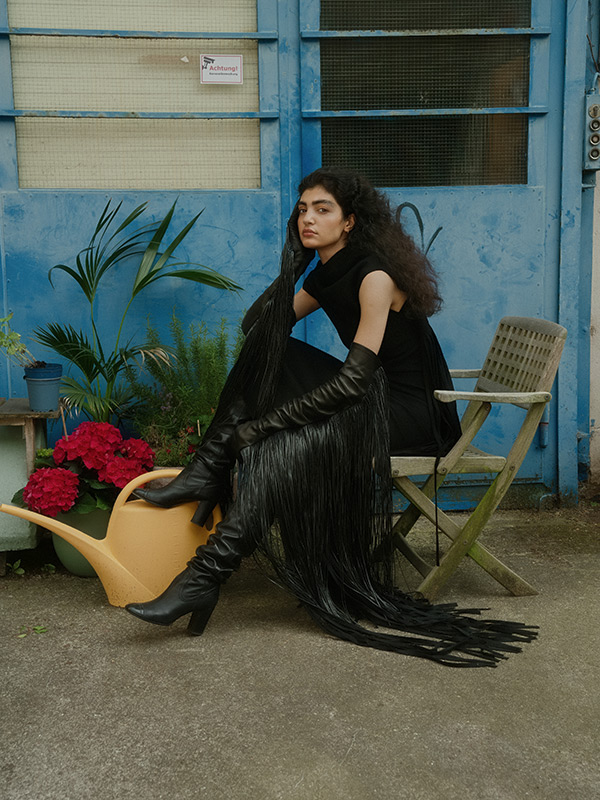
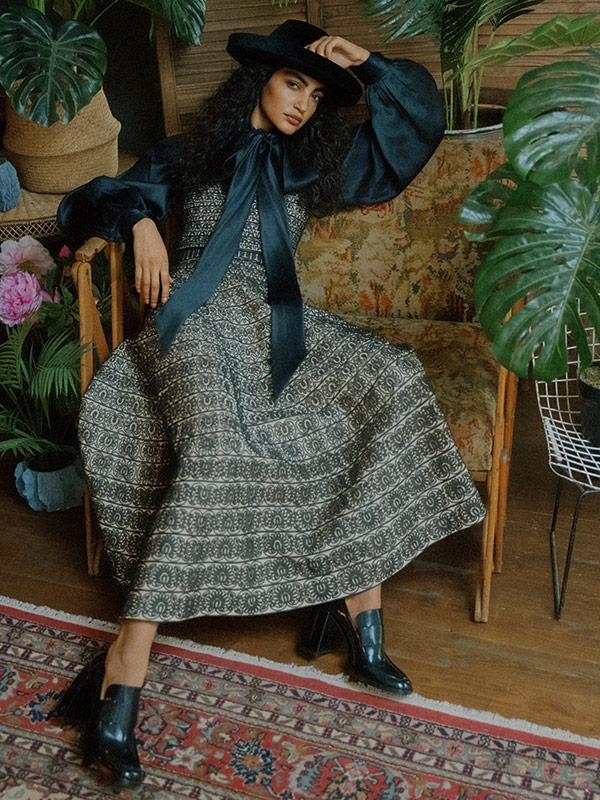
FACES: Since you came third on “Germany’s Next Topmodel” in 2021, your career has been on a steady upward trajectory. What does an average day in your life look like today? Does it even exist?
Soulin Omar: To be honest, there is hardly an average day for me. Every day brings something new – sometimes a shoot, sometimes a creative flow, sometimes just normal everyday life. I love this mixture of structure and spontaneity.
Q: Do you describe yourself as a model, influencer or both?
SO: I am a model, yes, but I also use my platform to make important topics visible. I want to inspire, not just represent.
Q: What does home mean to you? And where is it?
SO: Home is no longer a place, it’s a feeling, something that lives inside me. Syria is my origin and my history. Germany is my now and my future. I live between two worlds, and maybe that is my true home. For me, home means feeling safe, understood and loved – sometimes it’s my apartment, sometimes it’s a conversation with family or friends, and sometimes it’s just this inner peace within myself.
Q: What is the biggest misconception people have about refugees – even well-meaning ones?
SO: That the worst is behind them. Flight is not a story with a happy ending, but a process. And you often stay on the road for a long time internally, even when you have arrived externally.
Q: If you could explain to Western media something about Syria that is always misrepresented, what would it be?
SO: That Syria is not just a country of war. Syria is full of culture, beauty, history and incredibly strong people. Our stories are not one-dimensional.
Q: Does it get easier to talk about your home country over the years?
SO: Yes and no. Over time, I find better words and more inner peace to talk about it. At the same time, the emotional connection remains strong. That doesn’t always make it easy, but it makes it all the more meaningful.
Q: Is there a part of you that has stayed in Syria forever?
SO: My childhood and certain memories, places and smells. They are deeply rooted in my heart. They accompany me everywhere, in a beautiful way.
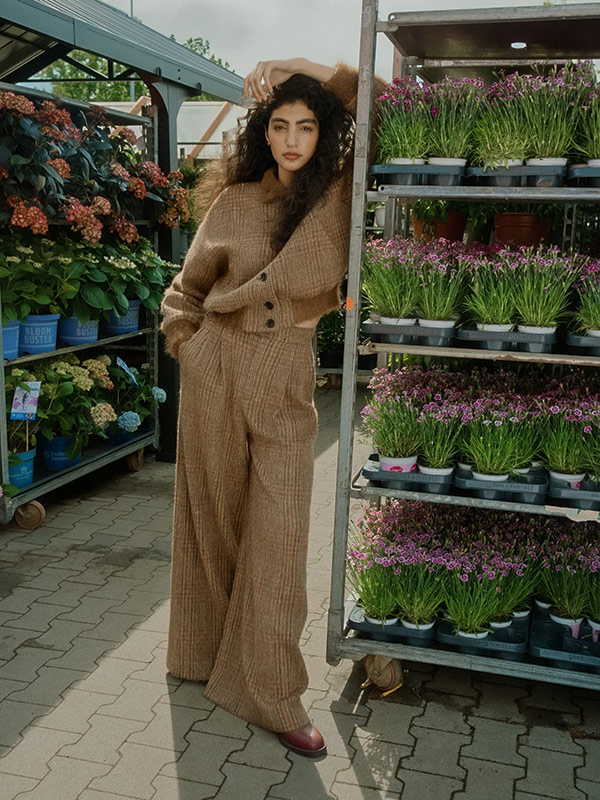
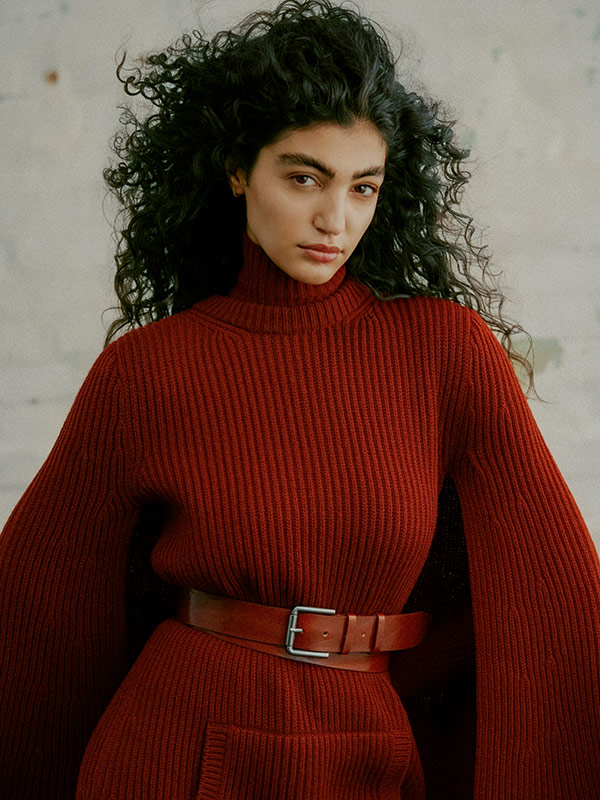
“The fashion industry can be feminist if it empowers women, celebrates diversity and creates fair conditions.”
Q: How have you experienced the fashion industry in recent years?
SO: It’s on the move. There is progress towards diversity, which is great to see. At the same time, there is still a lot to do. I see the industry as a place full of opportunities, but also challenges.
Q: Was there a moment when you realized that the industry is tougher than you originally thought?
SO: Yes, when I realized how strongly external expectations can influence your self-image. You have to learn to stay with yourself. It’s not always easy, but it’s very valuable.
Q: What urgently needs to change in the fashion world? And where has progress already been made?
SO: We need more real diversity – not just visually, but also behind the scenes. I see progress in the representation of body shapes and origins, but this must not remain a trend, it should become the standard.
Q: So it often happens that inclusion and diversity are more empty talk than actual practice?
SO: Sometimes it’s marketing, but there are also authentic approaches. I like working with people who don’t just show diversity, but really live and understand it.
Q: What has been your favorite job so far?
SO: A Mytheresa x Missoni campaign that was shot in Portofino. The backdrop was gorgeous.
Q: What does fashion mean to you in your everyday life?
SO: For me, fashion is an expression of my mood, my personality, sometimes even my attitude. It gives me space to celebrate myself.
Q: How would you describe your personal style and what is your favorite piece in your closet?
SO: My style is a mixture of elegant, playful and modern – I love strong cuts as well as flowing fabrics. My favorite piece is an evening dress by Saint Laurent.
Q: Which current fashion trends do you love and which do you think are terrible?
SO: I love the return of minimalist elegance and natural colors. I don’t really think anything is terrible. Fashion is expression and everyone has their own style.
Q: To what extent is the fashion industry feminist – and can it even be?
SO: It can be feminist if it empowers women, celebrates diversity and creates fair conditions. It’s a process and we all have a role in it.
“I think it’s important to also see a future in which you don’t perform, but simply live.”
Q: What have you learned about yourself since having a big presence on social media?
SO: That my voice can make a difference. And that it is important to set boundaries and not lose yourself.
Q: How do you deal with the fact that people only see a fraction of you – and still allow themselves to make a complete judgment?
SO: I’ve learned not to take it personally. For me, it’s about living a version of my life that is real, regardless of expectations or external labels. I want to grow, learn and create space. Those who really want to know me can do so and those who don’t shouldn’t judge me either. I remain true to myself.
Q: Are there things about you, personal but also activist, that you never post?
SO: Yes, a lot of things. Not everything has to be public. Some things retain their power precisely because they remain private.
Q: Do you ever imagine what it would be like without social media and followers? Does it feel liberating or scary?
SO: The thought can be liberating. At the same time, I also see social media as a tool. It’s important that I use it and not the other way around.
Q: What do you really want to achieve that has nothing to do with modeling?
SO: I want to show others that origin is not a limit. If I can make someone feel seen or inspired, that’s bigger than any job for me.
Q: What advice would you give your younger self?
SO: Be patient with yourself. You don’t have to know or be able to do everything right away. Your path unfolds step by step.
Q: What three things could you not live without?
SO: Family, honest conversations and hope.
Q: What kind of woman do you want to be when you’re 40 and how will you become it?
SO: A woman with more inner peace, clarity and an open heart. At some point, I just want to be at a point where I can say: I am at peace with myself. Not perfect, but real – that’s success for me. I will become it by living courageously, curiously and mindfully now.
Q: Do you have a version of your future that is completely silent – without flash, without attention?
SO: Absolutely. I think it’s important to also see a future in which you don’t perform, but simply live. Without a stage, but with depth, tranquillity and real moments. Maybe a house with a garden, books, a studio, a family – less outside, more inside.
Q: What fact about you that nobody knows and nobody would expect would you like to tell us?
SO: At school, I was the one who always sat in the front row. Not because I had to, but because I found it really exciting. I loved understanding and questioning things. I was a bit of a nerd.
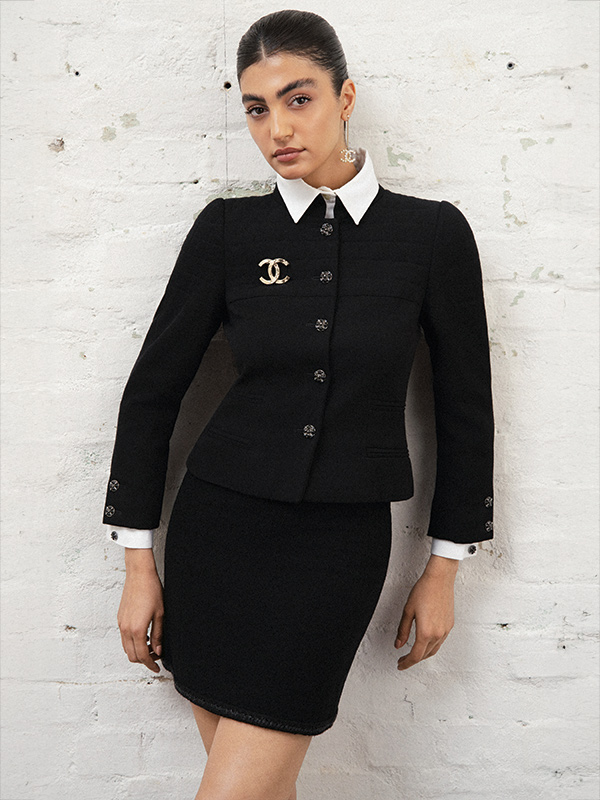
You can find all our fashion lines here.
Stay up to date with Soulin Omar.