
Lex Borrero, GQ’s 2025 Watch Collector of the Year, on Speed, Craft, and Why Connection Is the Only Luxury That Still Matters
By Mariya Donat, for FACES
A boy walks into an office in Miami and stops in his tracks.
He’s never met the man behind the desk. He’s just tagging along while his dad takes a meeting. But there’s a wall of model cars in front of him, and within a minute he’s sprinted back out to the car to grab his own toy collection — because finally, finally, here’s someone who might actually get it.
The man looks through the boy’s cars with him. Points to one. “I drove this one,” he says. “In Japan. Want to see the video?” Then he does something most people with a garage full of real ones would never do: he walks the kid outside, pulls the cover off a Ferrari, and asks if he wants to sit inside.
The boy climbs in. Takes pictures with his dad. Makes engine noises with his own mouth, because eight-year-olds don’t need a V8 to feel like they’re flying.
When the boy leaves, the man turns to his team and says one sentence: “That’s why we’re doing this.”
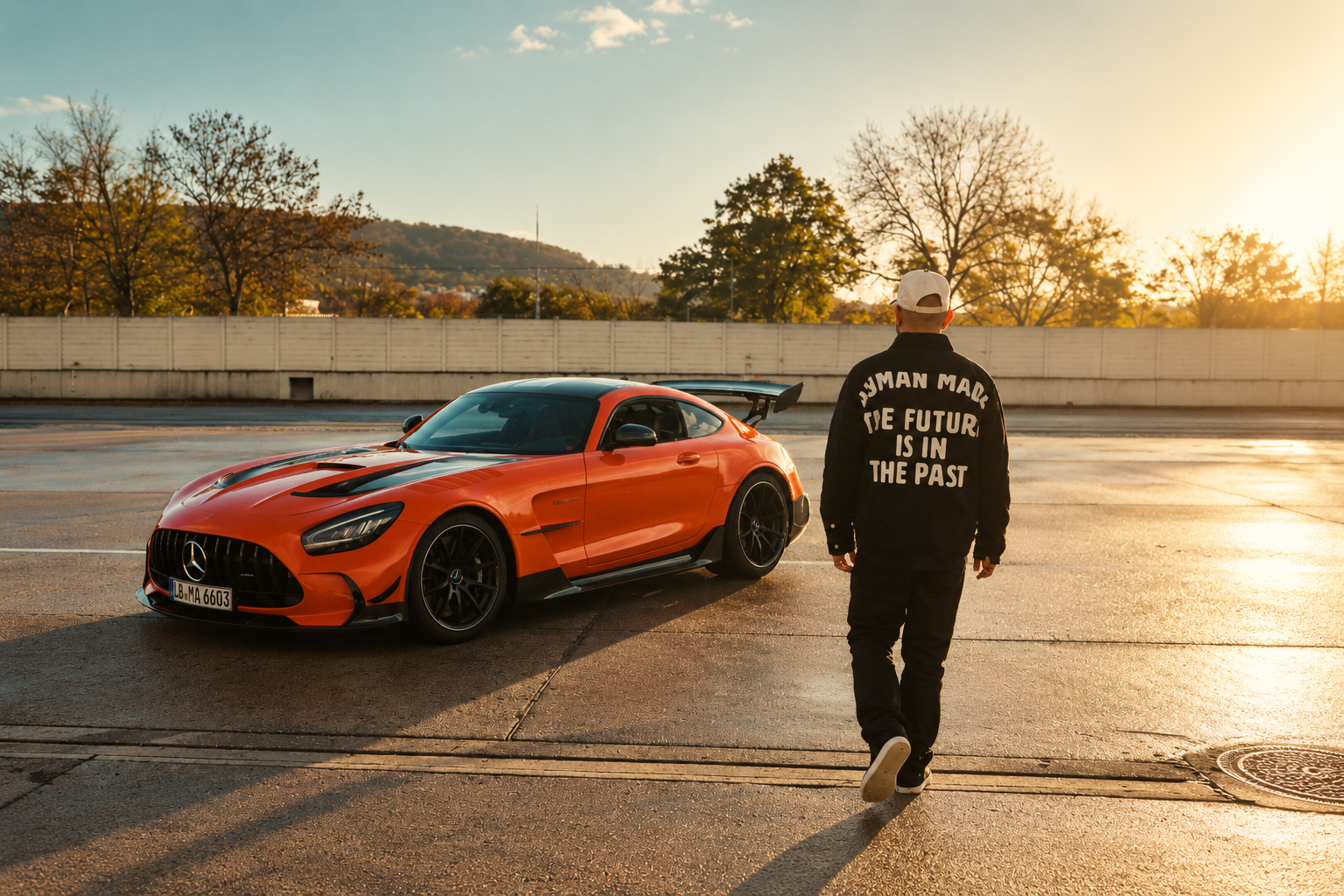
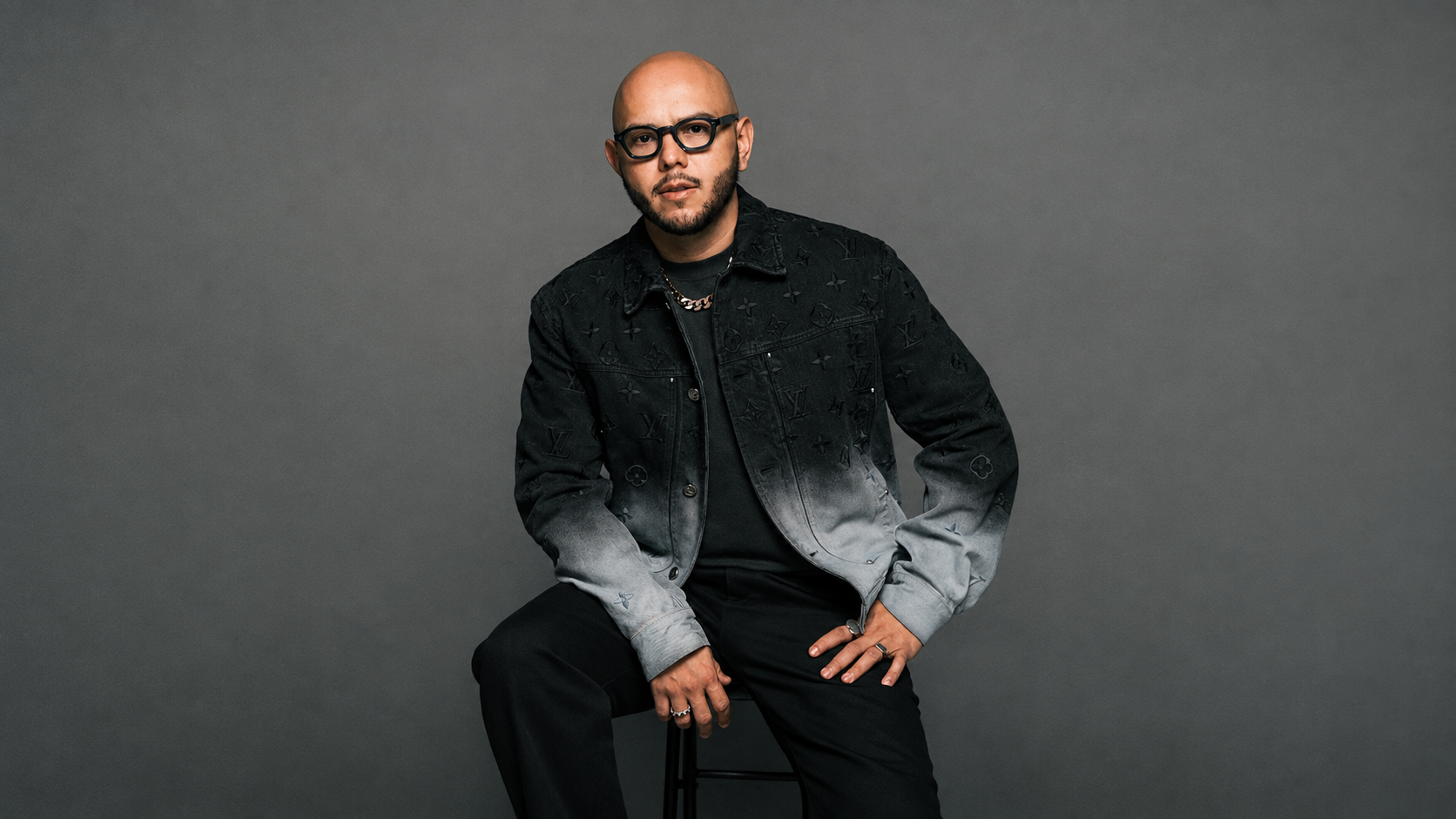
His name is Lex Borrero, and I promise you’ll hear the rest of that story, in his own words, before we’re through. But I’m opening with it because it’s the whole answer to the question everybody asks him first.
Why does the world need another one?
There is no shortage of fairs for people who collect watches and cars. Geneva has one. Dubai has one. By this November, Miami will have several. So when Borrero — a Grammy-nominated music executive turned entrepreneur, and GQ’s 2025 Watch Collector of the Year — announced he was building yet another one, the obvious question was: why?
The honest answer isn’t really about watches or cars at all. Time to Drive is not a luxury goods fair. It’s a festival for people driven by something no price tag can buy — speed, the smell of an engine bay, the absurd patience it takes a watchmaker to hand-finish a single movement. And it’s built by someone who was quietly one of those people himself, long before the industry learned his name.
Quick confession: I don’t know a horsepower figure from a caliber number. What I do have is a real appetite for speed and a weakness for anything made exactly right by hand — turns out that was the only passport I needed. What followed was one of the sharpest, liveliest hours I’ve spent with one of the most multifaceted, inspiring people I’ve interviewed all year.
At a glance: Time to Drive
- What: A three-day car-and-watch culture festival — early coverage is already calling it “the Coachella of watch events”
- When: November 6–8, 2026 (a separately ticketed track day, Driver’s Seat, opens the weekend on November 6 at The Concours Club)
- Where: Mana Wynwood, Miami
- Founders: Lex Borrero and Perri Dash, creator of the Wrist Check Pod
- Confirmed partners include: Chopard, Zenith, Grand Seiko, Porsche, Mercedes-Benz, and a growing roster of independent watchmakers and car collectors
- More: timetodrivefest.com · @lexborrero
The reinvention
To understand why Borrero’s name carries weight in rooms most newcomers never get invited into, rewind a decade. He made his name as co-founder and CEO of NEON16, the multimedia entertainment company he built with Latin superproducer Tainy — an outfit Fast Company crowned one of the “Most Innovative Music Companies” in America. His fingerprints are on work with J Balvin, Bad Bunny, Maroon 5, and Justin Bieber, connected to hundreds of millions of records sold worldwide. He went on to co-manage Will Smith’s return to music and, through AM16, the brand and culture agency he later acquired, land partnerships with Red Bull USA and Formula 1.
Most people who reach that altitude plant a flag and coast. Borrero sold the entertainment business instead and started over, building from a completely different set of materials — cars, watches, coffee, community. The bet paid off in December 2025, when GQ named him Watch Collector of the Year. It’s not a title you win for running an events business. It’s one you win for taste, inside a world that doesn’t hand out credibility for free.
“To be honest, I never intended for all this to become a reality,” he says of the pivot, laughing. “I collected both, quietly, for years. In entertainment, flaunting a serious watch or car collection wasn’t currency — it was a liability. So I kept it private.” That changed once he stepped back from entertainment to help build Miami Watch Club, where he serves as co-president. What he discovered surprised him: the object was never the point. “The importance of community became obvious fast. Belonging had to become the new luxury — being able to share a conversation around a hobby became more important than the item itself.”
The road trip that started it all
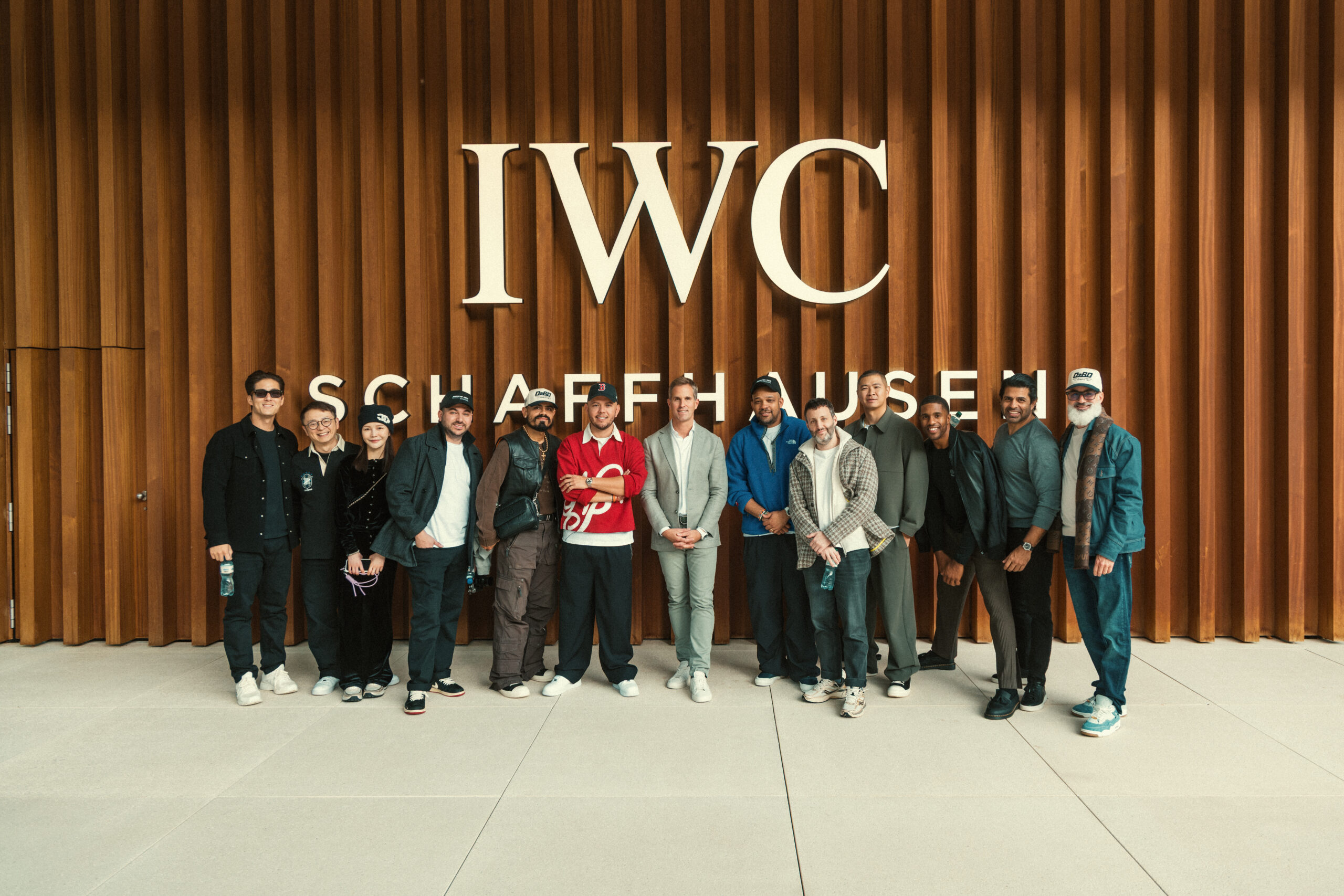
Time to Drive is officially co-founded with Perri Dash, the watch collector and creator of the Wrist Check Pod. But when I ask him point-blank for the origin story, the one he reaches for is personal: a road trip with his own father.
“I’m a Mercedes-AMG ambassador, and my father and I take a motorsports trip every year — it’s how we rebuild our relationship,” he says. “Coming back from one of those trips, I was telling people they had to come on one. And it clicked: car people and watch people speak two very different languages. You can own a beautiful Porsche and not know the difference between a brake and a differential. You can have a stunning watch collection and not know anything about movements. Neither side really crosses over — not because they don’t want to, but because nobody built the bridge.”
So he built one — what he calls “a human experiment”: take people from the car world, the watch world, and entertainment, run them through a carefully storytold trip, and see whether they discover how alike they actually are. Year one delivered. “This incredibly diverse group of people became best friends. Music executives who came on the trip became car and watch guys, and vice versa. And along the way, they spent real money — enough that I knew immediately: this works.” The trips multiplied, to Japan, then Europe — and along the way came a moment of genuine surprise. “I had guys terrified to drive learning stick shift in Germany. In Tokyo, a very successful executive just let loose one night — started dancing, said he hadn’t danced in years. That kind of freedom, the discovery that everything you’ve been taught to hold back might not be serving you — that’s the part I didn’t expect to matter as much as it did.”
Somewhere between those trips and the watch-world calendar — Watches and Wonders, Dubai Watch Week, the Mille Miglia — the idea found its next form. “I felt like there was an event missing that captured what we were capturing on these trips. At first I thought I’d get maybe five watch brands. Now it’s a massive event with more moving parts than I ever imagined. But honestly, I’m building it for the kid in me.”
Can you bottle it for four thousand people?
Here’s where I push back. Engineering intimacy for twelve people on a private trip is one thing. Promising the same feeling to thousands of strangers in Wynwood is a different sport entirely. Doesn’t the magic risk dying in the jump?
He doesn’t flinch. “We’re building an experience that touches every sense — lighting, sound, music, the way the space physically moves you.” His answer to scale isn’t more polish. It’s more humans doing the work a great host would do. He’s assembled roughly two dozen leaders from America’s top watch and car clubs specifically to work the floor. “If they see someone standing alone, their job is to go open a conversation. We’ve asked every owner lending us a car to stay near it and tell its story. We’re engineering all of this around psychology, on purpose.”
Then there’s the floor plan itself — a small act of rebellion against how luxury usually organizes a room. “Most people are intimidated to walk into a boutique because they can’t afford a $30,000 watch. Here, you’ll be able to try it on like you can. There’s no VIP section, no roped-off area separating the $500-watch people from the $500,000-watch people. Everyone is equally important.”
“I’ve genuinely never experienced that,” I tell him — the instinctive VIP-or-not sorting that defines nearly every high-end event I’ve covered. “That’s exactly what we’re building,” he says. “That’s the core of it.”
Chasing the Coachella effect
Press has already started calling Time to Drive “the Coachella of watch events.” He doesn’t run from it. “I’d love to lean into that. Coachella became something bigger than any artist on the lineup — an experience people want to have once in their life, the way Woodstock was in the ’70s. That’s the goal here: it shouldn’t feel like a business. It should feel like a dream festival of music, culture, and excitement.”
Assembling the brand list behind that ambition, he admits, was the hardest stretch of his career. “I don’t think I’ve ever worked harder on anything. Grand Seiko said yes almost instantly — no hesitation. Chopard and Zenith came in fast too. On the car side it was trickier; dealers move differently. Mercedes came in fast. Porsche I had to fight for.” Being named GQ’s 2025 Watch Collector of the Year didn’t hurt: “People trust that this isn’t someone’s first rodeo, that I know how to build and execute at a high level. That gave me a kind of credibility I couldn’t have bought.”
The big idea
Borrero’s signature line — belonging is the new luxury — could sound like a slogan coming out of someone else’s mouth. Out of his, in context, it sounds more like a diagnosis.
“We live in a world where people are getting wealthier and lonelier at the same time,” I put to him. “Luxury has become so personal that the more personalized it gets, the more isolated people become.” He doesn’t disagree. “What we’re doing is connecting two worlds and letting people genuinely discover each other. In watches, you have all the information in the world and none of the adrenaline. In cars, you have all the adrenaline and none of the story. So we’re giving watches the excitement and cars the storytelling. The goal is that you leave having made new friends — that you feel what I call the Coachella effect: this might have been the best weekend of my life.”
The boy, the Ferrari, and the real reason
I ask about legacy, and the tone shifts, just slightly, from builder to father. “When I think about legacy, I hope my daughter remembers that her dad built community — that he cared more about the human being than the financial success of anything. I didn’t love music for the art alone; I loved it as a vehicle to help kids reach their dreams.”
Then, unprompted, he tells me the story I opened this piece with. “A friend brought his son by my office recently — I’d never met the kid. He saw my model cars and lit up. I walked him into the garage, pulled the cover off my Ferrari, and asked if he wanted to sit inside. He looked at me like it was the most impossible thing in the world. When he left, I turned to my team and said — that’s why we’re doing this.”
He pauses. “That’s the purest human emotion there is: the idea that nothing is impossible. Maybe one day that kid buys a Ferrari, maybe he doesn’t — but for one afternoon, something that felt impossible became real. If you can dream, and you understand how to get out of your own way, you can build the life you actually want. It doesn’t have to be about wealth. At the core, this whole thing is a machine for dreaming.”
The question nobody asks
Before we wrap, I ask what he wishes more journalists asked him. “People look at ventures like this as pure business — which is fair. But what actually wakes me up every morning is disruption — the idea that we’re changing how people think about cars and watches, about the emotion attached to them. And most importantly, dismantling the idea that belonging requires wealth. It doesn’t. If you’ve got the six-figure Patek, great. But if you don’t, you’re just as welcome.”
It’s a fitting note to end on, from a man who spent a decade building emotion into three-minute songs and is now spending his second act building it into a three-day weekend — with Germany, Japan, and a growing list of cities already on his mind for what comes after Miami. Whatever Time to Drive becomes — festival, movement, or something bigger than either word — Borrero seems far less interested in what it’s called than in what it makes people feel.
Which, if a boy in a Ferrari he’ll never forget is any indication, has always been exactly the point.
Lex Borrero is the co-founder of NEON16, AM16, 0260, and Time to Drive (with Perri Dash) — and GQ’s 2025 Watch Collector of the Year. Time to Drive launches November 6–8, 2026, at Mana Wynwood, Miami. Tickets and details: timetodrivefest.com. Follow along: @lexborrero.